


Renowned for paintings that blend portraiture, abstraction, and imagination, Yann Lemieux has forged a unique path from business management to artistic creation. In this interview, he reflects on his evolution as an artist, his creative process, and his deeply human vision of art.
You worked in animation, event planning, and management before dedicating yourself to painting. What was the trigger that made you take that step?
I often like to talk about my "first professional life" and my life as an artist. Yet the transition between the two happened fairly naturally, at a moment when I was ready.
Around 2015, on a Saturday evening in front of the television, I painted a mandala. Without any particular intention. Just for the pleasure of it. The act itself did me a world of good. I did more of them, always for the pleasure, and for the first time since adolescence, I began to consider the possibility of an artistic career again.
The difference was that this time, I was no longer the same person. I had accumulated several years of experience in business management, in logistics as well as in sales and marketing. So everything fell into place quite naturally. I wasn't starting from zero.
I had given myself a five-year goal to make a living from my art. In the end, after only two years, demand had grown so much that I found myself with two full-time jobs: company director on one side, painter on the other. I have to admit the choice wasn't very difficult.
After years spent putting my energy into the success and development of businesses belonging to others, I felt the need to invest those same skills in my own project. There was also a freedom I had never known before. For the first time in over fifteen years, I no longer had a team to manage. I could create every day, be master of my own schedule, choose my collaborations, and simply listen to my own desires, without compromise.
At the end of the day, there was never one specific triggering event. It's more a whole journey that led me here.
When I was younger, I already dreamed of becoming an artist. But I had absolutely no idea what that profession really meant. Looking back, I think that dream perhaps never disappeared. It simply came back on its own, at the moment when I was finally ready and sufficiently equipped to give it a real chance.
You move between abstraction and figuration, between street art and classical composition. How would you describe your style to someone who doesn't know you yet?
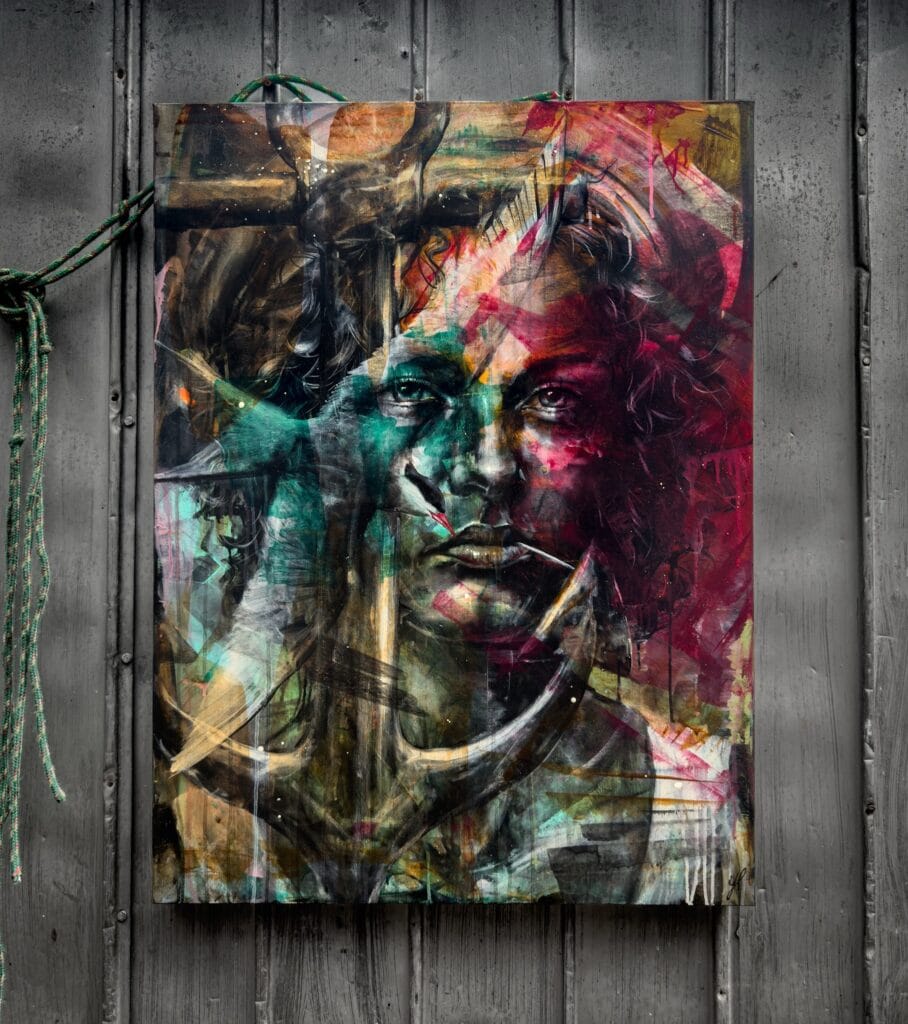
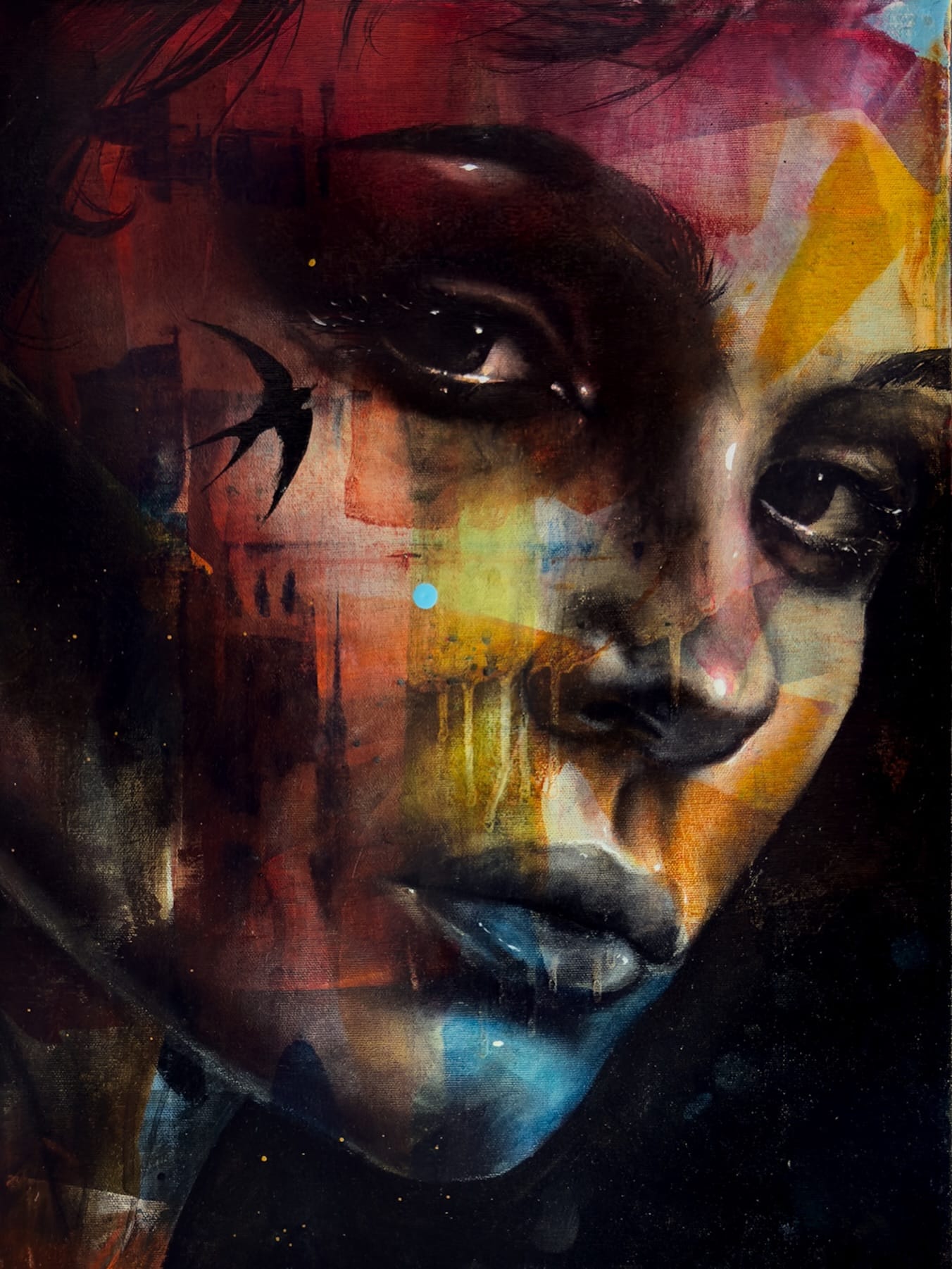
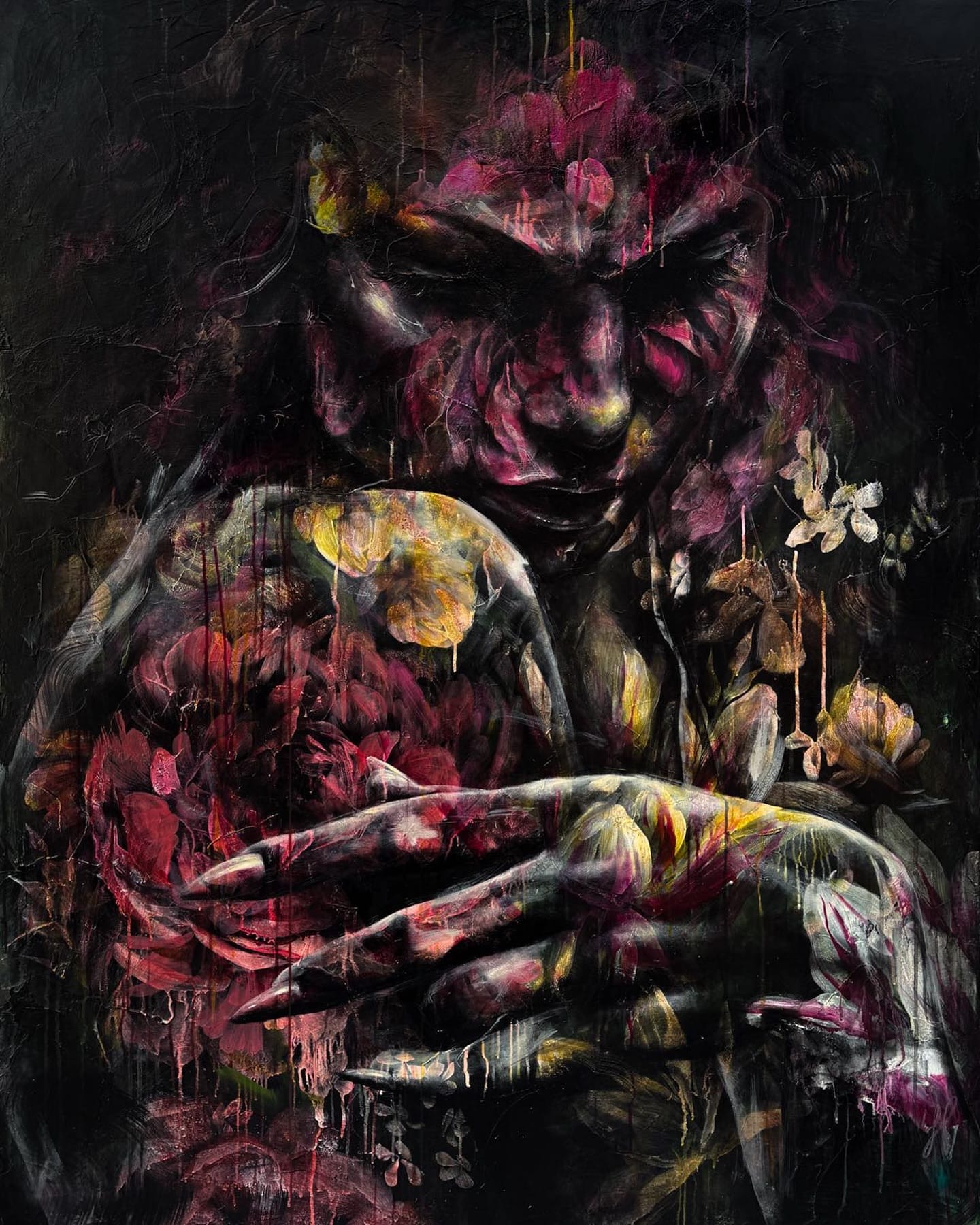
The human figure is always at the center of my work. Everything starts from a portrait that I then plunge into a often dark universe, where the reference points become deliberately blurred. I layer animals, landscapes, textures, and various elements in transparency onto it, so that you never quite know what belongs to the foreground or the background. It's a bit like a thought: nothing in it is perfectly clear, you only perceive fragments of it.
I like my paintings to be discovered slowly. At first glance, you see a face. Then, a few seconds later, you notice a building, a bird, a forest, or another detail that was there from the start. This second reading interests me just as much as the first.
Even though I consider my work figurative, there's always a part of it that tips over into abstraction. Deconstruction, drips, gesture, and accidents are an integral part of my visual language. I like certain areas to remain open to interpretation rather than being fully explained.
Ultimately, I rarely paint a face simply to paint a face. I try instead to give shape to something we don't see: an emotion, a memory, a floating idea, or an inner conflict. The transparencies allow me to make several levels of reading coexist within a single image.
The female figure is at the heart of your work. What does this subject allow you to express?
I've always been naturally drawn to portraits of women, from drawing to painting. The gazes especially. I see in them a certain grace, a delicacy in the features, in the expressions, in the long hair.
As I write this answer, I realize this is probably a bias of our era. We readily associate these qualities with women, when a man could just as well embody them. Still, the fantastical stories, mythologies, and various worlds that feed my imagination often place female figures in the foreground. I think that inevitably influences the way I create.
Over the years, through introspection and analysis of my work, I also realize there may be something else at play. Many of my pieces deal with very personal subjects, reflections, memories, or emotions that are my own. Yet going through a female character, my "opposite," creates a certain distance. It makes the immediate association between the work and the artist more difficult.
Or perhaps it's simply modesty. I'm not someone who is particularly demonstrative. It might be a way of talking about myself without feeling like I'm baring myself completely.
Your live painting performances are central to your practice. What does painting in public bring you?
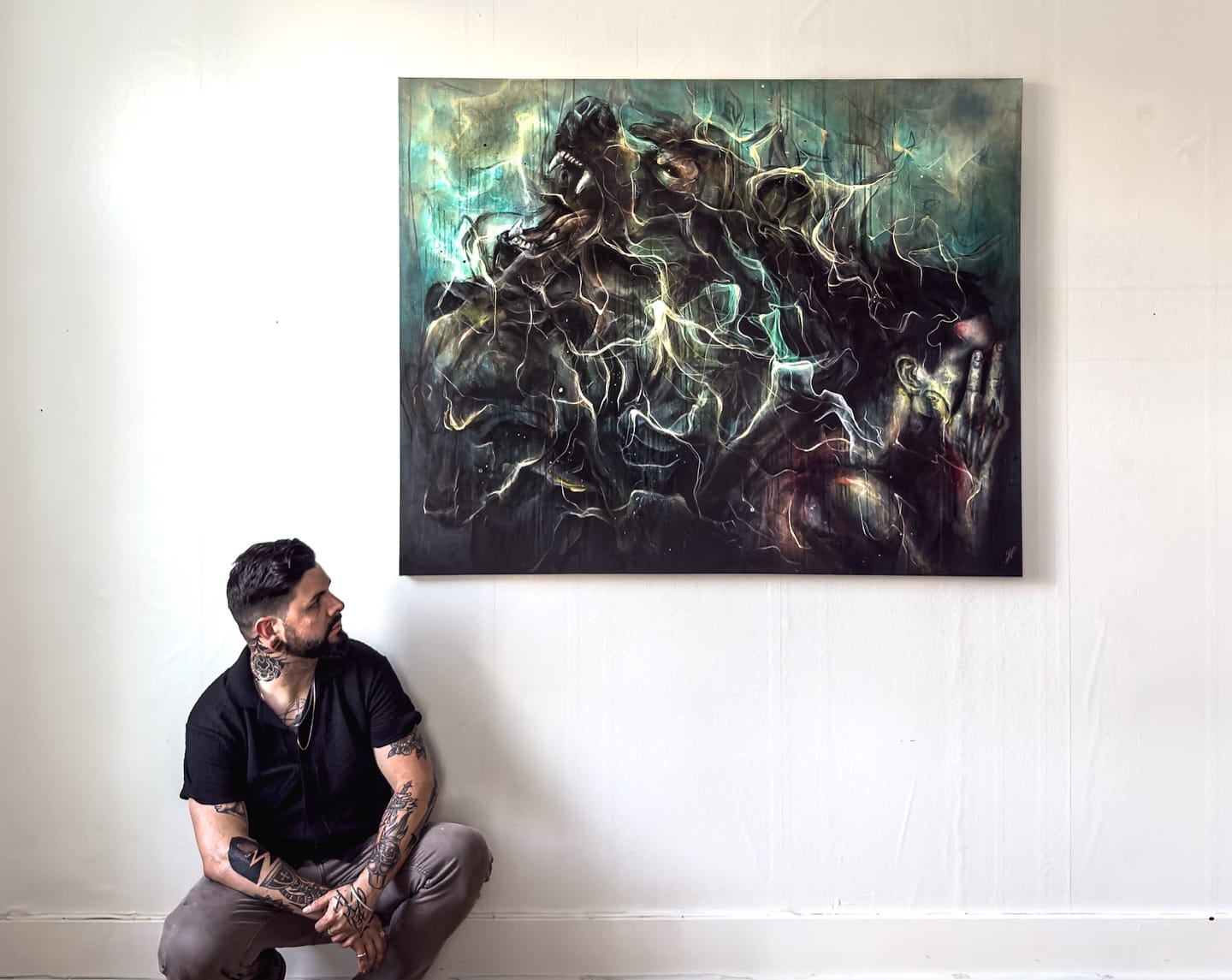
At first, it was mainly a different way of sharing my work. An exhibition shows the final result, while a live painting allows people to witness part of the creative process, a moment they normally never have access to. I literally move part of my studio into an event. People are curious, surprised, impressed. They see the hesitations, the mistakes, the corrections... in short, everything that gives birth to a work.
Of course, that also comes with a lot of pressure. When several hundred people are watching you work, you can't wait for inspiration to arrive. You have to move forward, make decisions, and accept that they'll be visible to everyone.
Over the years, I've learned not to suffer from that pressure anymore, but to use it. Many of the techniques I use today were born during public performances. Because I had to find a solution quickly, because I didn't have the luxury of starting over, or simply because a mistake forced me to try something new. I'm convinced that several of them would never have appeared in the comfort of my studio.
That's also how my speed paintings were born: fifteen minutes to create a giant portrait, with a visible stopwatch and music that builds tension for both me and the audience. It's probably the most demanding exercise I practice, but also the one that has made me evolve the most.
Ultimately, the best ideas I've had were often born in situations where I had no choice but to find a solution quickly. Every event is different. The conditions change, the audience changes, the environment changes. It's an excellent way to avoid falling into a routine and to keep evolving my practice.
You work with an ultra-low viscosity acrylic. How did you discover this technique, and what does it offer you that other mediums don't?
At first, I worked with a much thicker acrylic, the kind most artists start with. I had nothing against it. I managed to create things I was satisfied with, but I always felt something was missing.
Since I'm the type to constantly question my way of working, I started trying a whole range of paints, mediums, tools, and techniques. It was somewhat by chance that I came across Golden High Flow acrylic. I should mention, by the way, that I'm not sponsored!
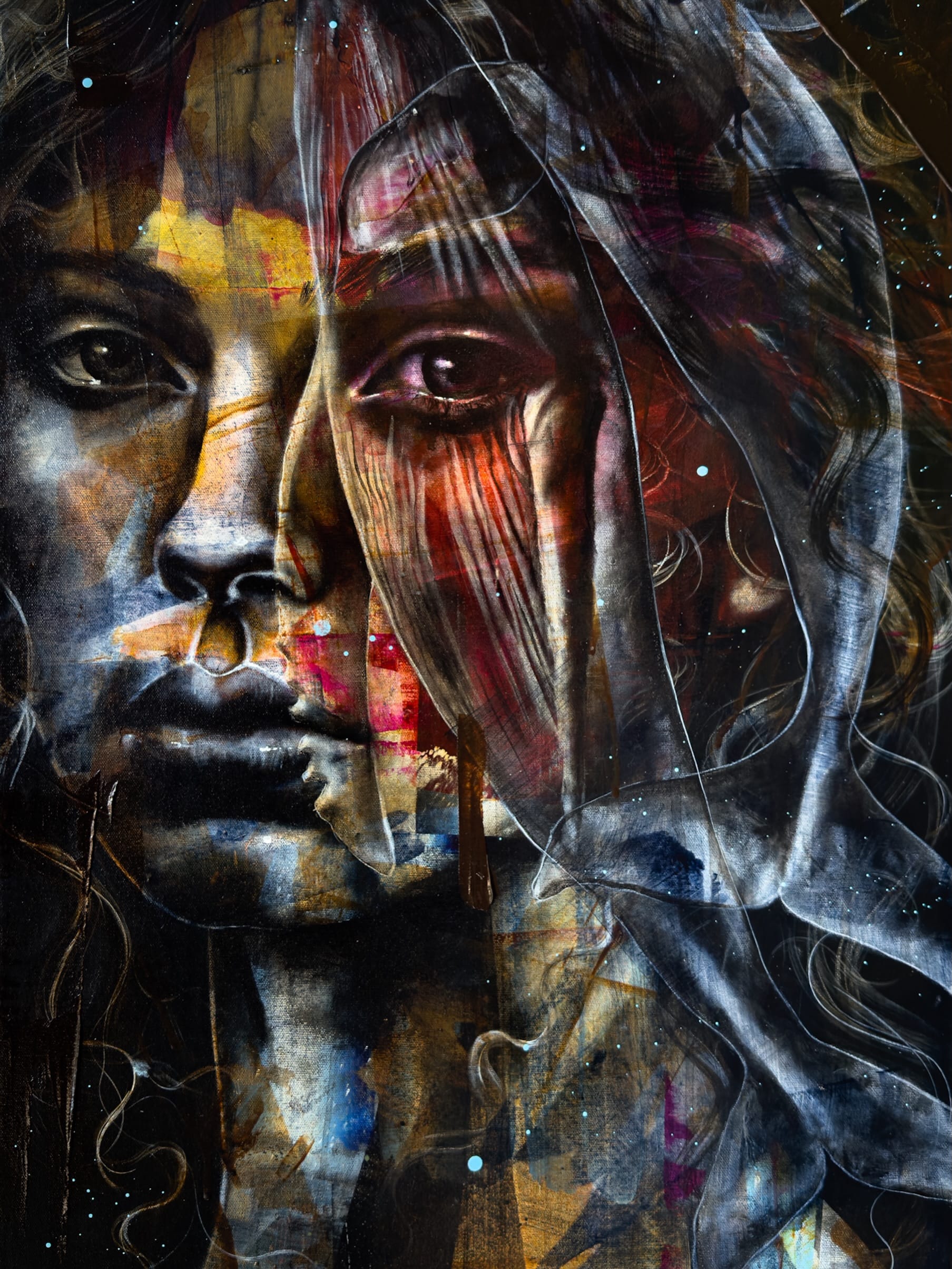
I discovered extremely rich pigments there, colors that keep their intensity as they dry, and above all, true transparency. For me, that completely changed the way I paint. I could finally layer elements for real, rather than simply creating an illusion of transparency with gradients. It became one of the foundations of my visual language.
The other advantage, much more down-to-earth, is its fast drying time. I can come back to the same area very quickly, multiply the layers, and build an image much more efficiently. This paint follows my rhythm rather than forcing me to slow down. It's probably the medium that comes closest to the way I imagine a piece while I'm creating it.
What pushed you to leave the traditional gallery model to found your own studio-gallery in 2021?
At the time, I wanted to explore a different way of showing my work. I didn't just want to present finished pieces on white walls. I wanted people to be able to step directly into my world, visit my studio, see where the paintings come to life, and sometimes even witness the creative process. For me, creation and sharing were part of the same experience.
My studio-gallery quickly became much more than an exhibition space. I organized art jams there, group exhibitions, creative workshops for all kinds of audiences, cultural outreach activities, and several benefit events for various community organizations. I also had the pleasure of hosting other artists there. Not necessarily to produce a work together, but sometimes simply to create side by side, exchange ideas, feed off each other, or break a bit of the solitude that this profession imposes.
I'm extremely grateful for everything those five years brought me. I experienced extraordinary encounters, meaningful collaborations, and projects I probably never would have carried out otherwise.
But I also have to be honest: all that energy demands an enormous amount of effort. Between managing the studio, organizing events, and creating, the days quickly become very long. In 2026, I felt it was the right moment to return to gallery representation. Not because I was turning my back on my studio-gallery, but because I wanted to breathe a little and put more time and energy back into what makes me happiest: standing in front of a canvas. Being able to count on a gallerist to represent and share my work now allows me to find that balance again.
Name an artist who inspires you, and why.
Without hesitation, Alfons Mucha.
What fascinates me about him is his ability to give movement to an image that is nonetheless completely still. The hair, the drapery, the compositions... everything seems to float with incredible fluidity. You almost forget you're looking at a fixed image.
I also admire the way he combines a very graphic language with realistic proportions. He manages to create almost dreamlike worlds without ever losing the viewer. Everything is perfectly balanced.
I can spend an enormous amount of time studying his works. Every time, I discover a detail, a line, or a composition that had escaped me. The more I look at them, the more I understand why they've stood the test of time so well. That's a quality I admire enormously.
Do you have any upcoming projects you'd like to tell us about?
I've recently begun presenting a new series of eleven works at Galerie d'art Annick Perron, in Baie-Saint-Paul. It's my first return to a gallery in nearly five years. This series will continue to evolve over the coming months, and several new works will be added to it.
I'll also have the pleasure of serving as honorary president for the third edition of Cercle PB15, an event that raises funds to support food security for children in the Quebec City region. About thirty artists, hundreds of works, and an essential cause. It's a project that's especially close to my heart.
Finally, I'm preparing to broadcast weekly live speed paintings, simultaneously on several platforms, from my studio. After several years of doing this kind of performance at events, I wanted to make them accessible to a larger number of people. People will be able to watch the entire creative process, ask questions live, and follow the evolution of a piece, from the first brushstroke to the final result.
Learn more about Yann Lemieux's art : website and Instagram.
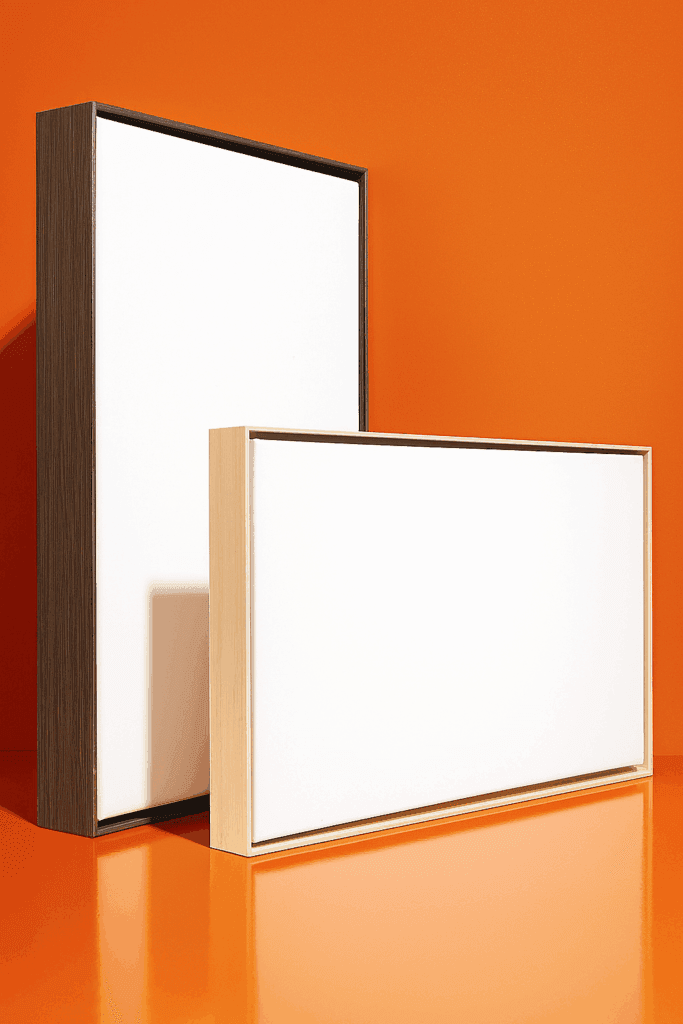
Are you looking for affordable floating frames for your artwork? Kolekin frames are the solution!
Easy to assemble at home.
Affordable (but with a gallery-quality look!).
Free shipping on all orders over $50.
