


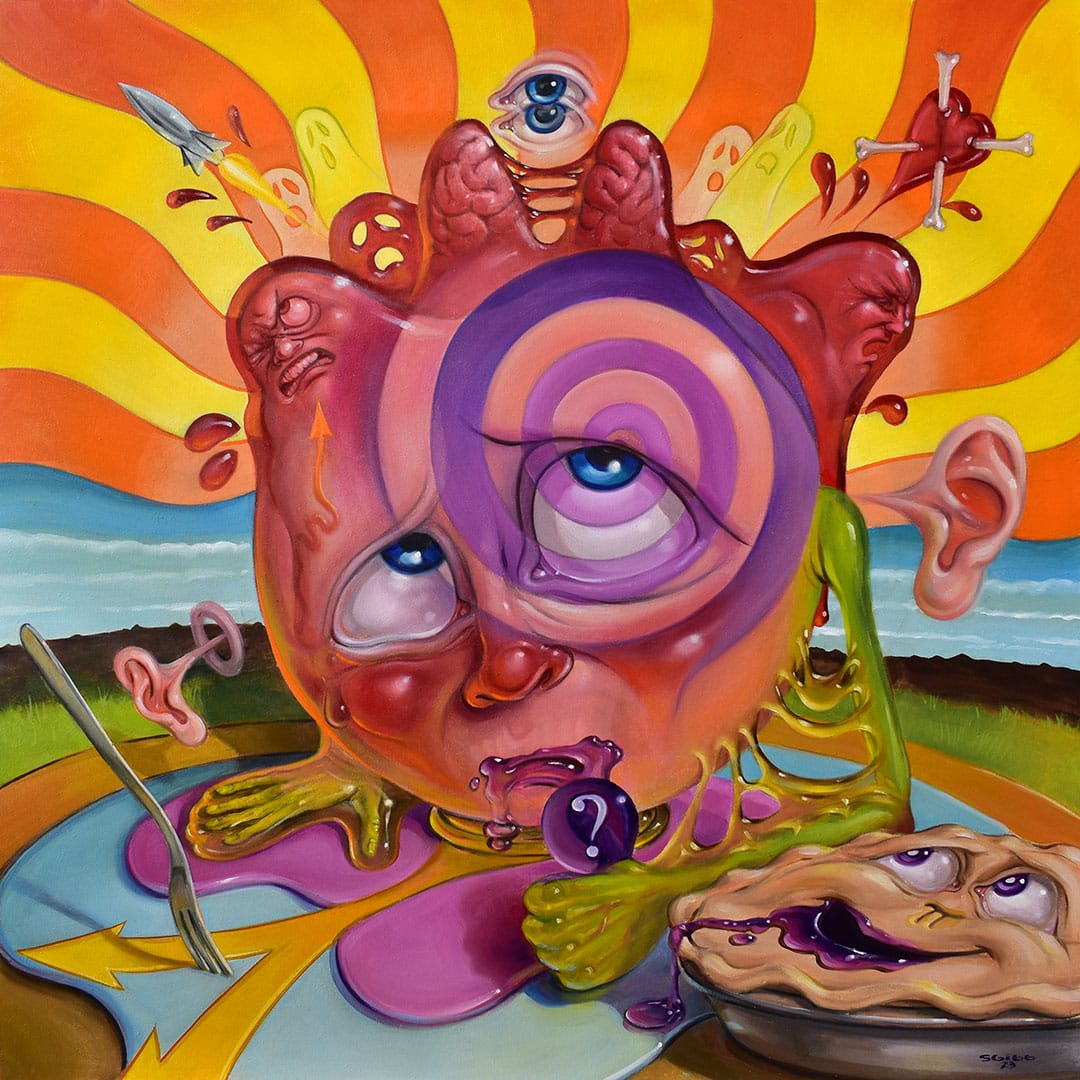
Stephen Gibb’s paintings are playful, strange, and full of hidden meaning. Blending cartoon-inspired imagery with surreal ideas, his work invites curiosity rather than certainty. In this interview, he discusses "Bubblegum Surrealism," humor, and the joy of leaving his paintings open to interpretation.
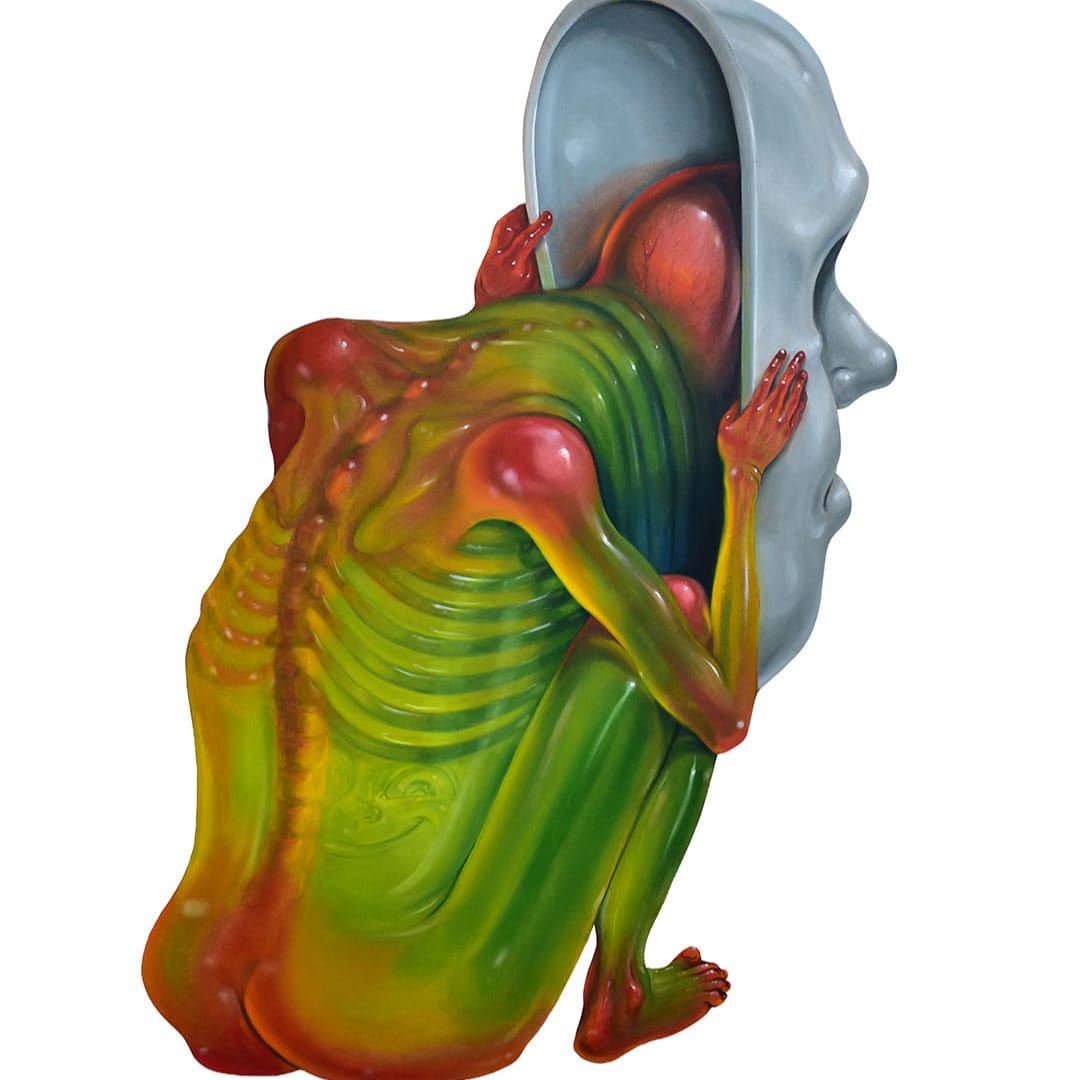
You talk about "Bubblegum Surrealism" as a label that's both fitting and ironic. If you had to explain it to someone discovering your work for the first time, how would you describe it?
The standard view of Surrealism usually sees it firmly rooted in its 1920s origin and that it’s an extension of Freud’s studies and psychoanalytic theory. The founders of Surrealism were very influenced by that (as far as I understand), but today I think we have progressed quite a lot by advancing new theories and ideas about the mind. I don’t lean on Freud, but I acknowledge him. I don’t want to project a serious, academic take on things and have stumbled into using cartoonish characters and anthropomorphized objects to act as stand-ins for humans to take the edge off the more existential and heavy content and themes. Like Bubblegum music from the late 60s was a more tempered version of psychedelic music, I feel like it’s the same with me and the contemporary surrealists who (in my mind — fine for them but not for me) take their work too serious and rely heavily on reference images.
You say your work has more to do with MAD magazine than with Freud. What does humor let you do that psychoanalysis doesn’t?
I think I deal with a lot of social issues, which is what Mad magazine did to perfection. However, I try not to be political because that is too deep a pit to plunder. I will examine existential dread and bliss but through a more contemporary psychological lens or one dipped in the paradigm of nursery rhymes, comic books, fairy tales and fables. The humour that comes from this literary tradition is often present, even if the subtext is dark. Maybe it’s a hook, like a wink to the audience that invites them in and allows them to see something a little more considered or bleak that they otherwise wouldn’t ponder.
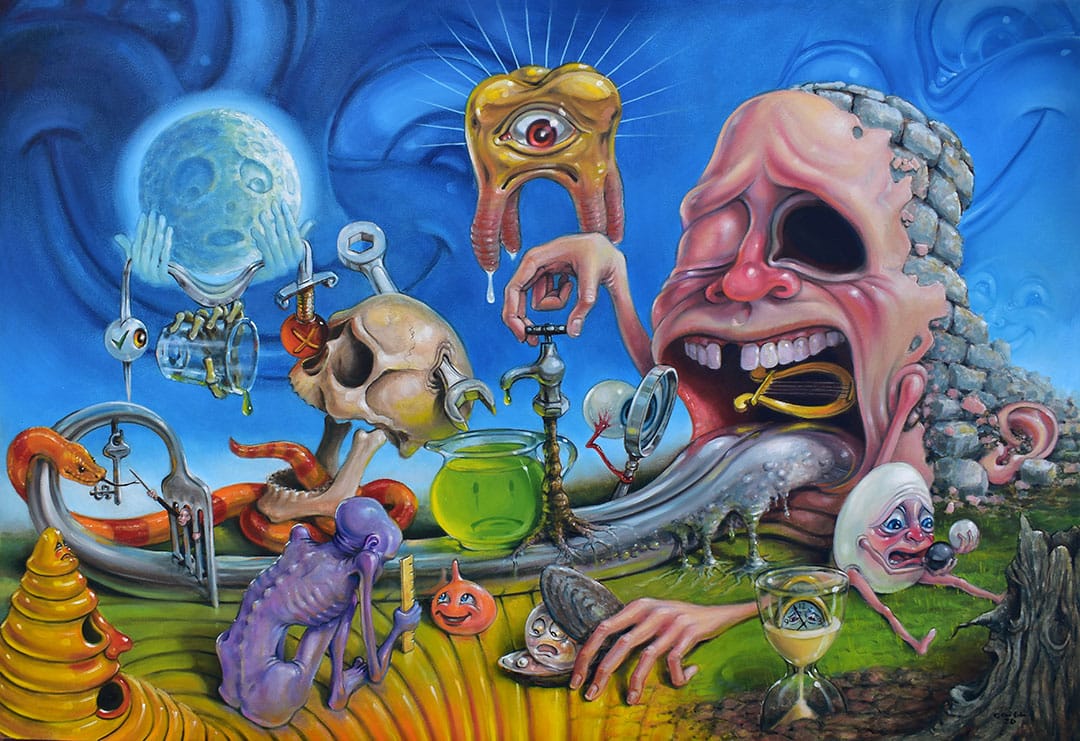
The commercial icon, the smiling advertising mascot, seems to hold a special place in your imagination since childhood. What does that fixed, artificial smile reveal, in your view, about the society that created it?
Sometimes the smile is ironic, sometimes genuine, so it serves its purpose as a psychological balance or contrast with the other things going on. It can mean whatever it means to the viewer, so someone may see it as a cheerleader for false happiness or as a beacon of hope in a complex world. It’s open ended, but sometimes it’s more obvious. Ambiguity is an element I love to play with because it enhances the mystery and supercharges the viewer’s inner dialogue.
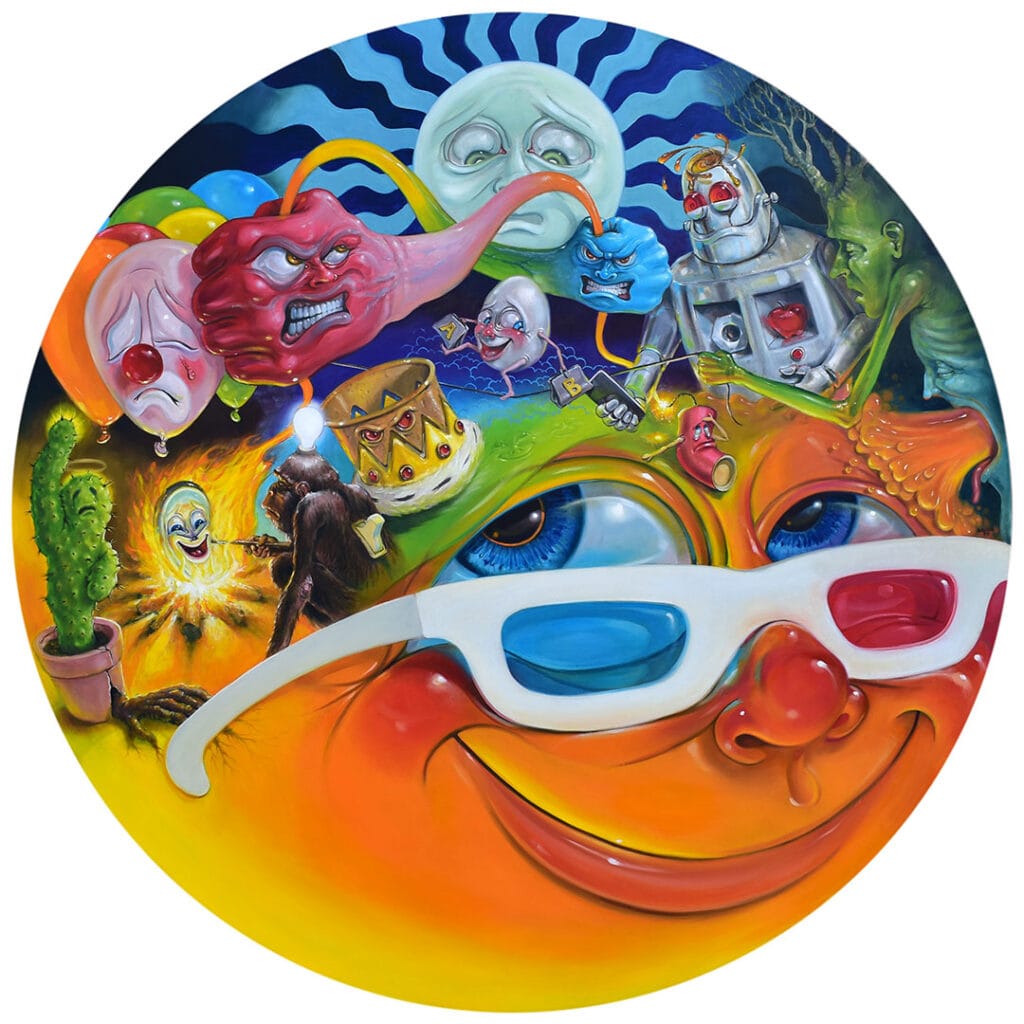
Your process often starts with a central image dictated somewhat subliminally. Are you ever surprised by the meaning of one of your own works once it's finished?
Yes, because the linguistic cousins, semantics and semiotics, are used in the same way we read images (at least in my mind), and they can be very idiosyncratic. I always use the example of an apple. You picture an apple but all the associations can take you in your own direction. Sometimes when I finish a painting there are associations that were never overtly part of the plan.
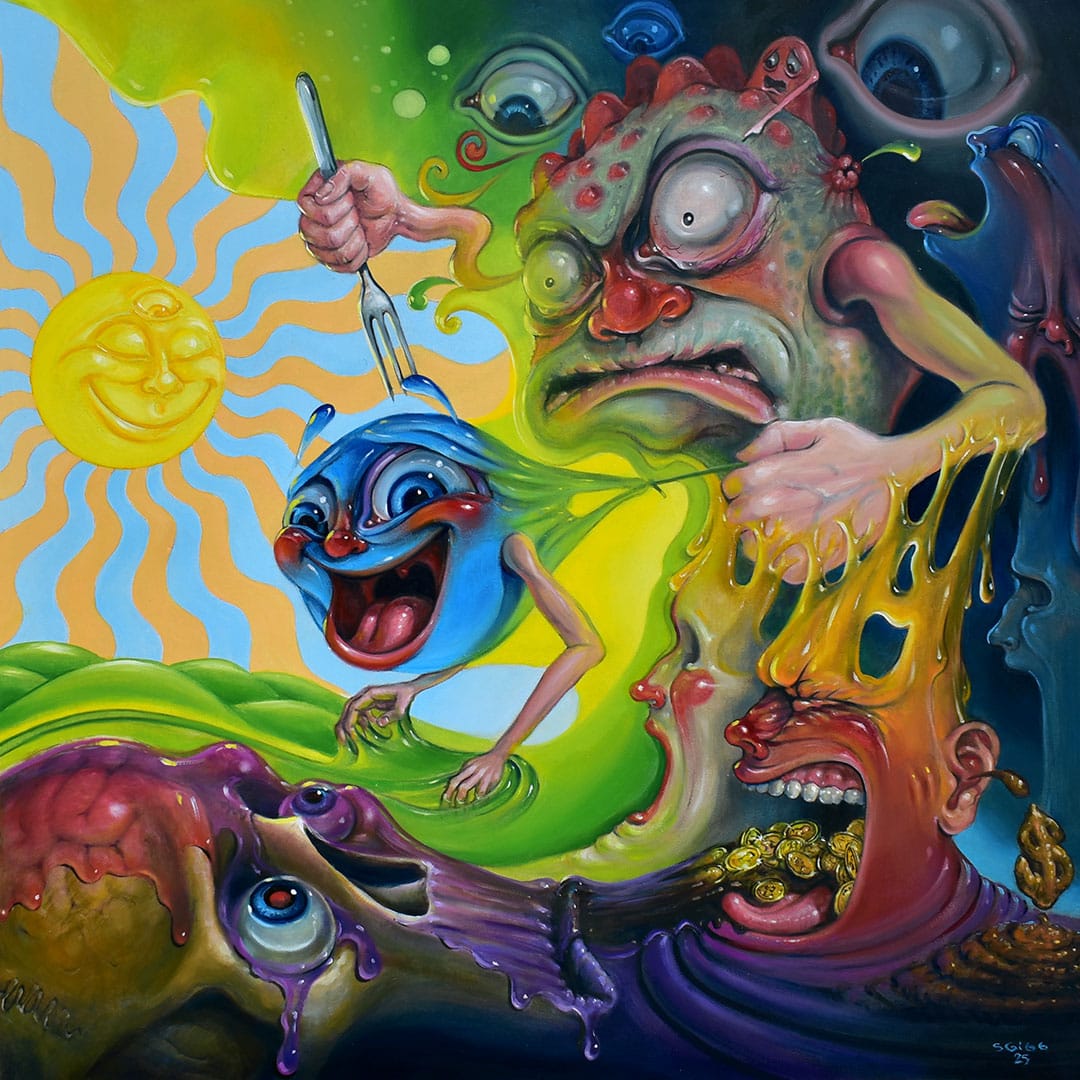
You're a purist when it comes to oil paint on wood panels, using glazing and chiaroscuro, while modern pop surrealism leans heavily on acrylic or digital media. Why this choice of medium?
It worked for me the best, and I just got in a rut.
You mention that viewers project their own traumas and memories onto your work. How do you deal with the fact that your pieces completely escape your control once they're exhibited?
That is my gift to the audience, it’s out of my control once someone else sees it. Once I’m done it’s up to them to unravel what they want, or to just enjoy the colours and composition. The audience has the chance to engage their own creativity and activate their brain waves.
Name an artist you particularly admire, and why.
I think I consistently go back to Man Ray. He seemed to have been content with being his own creative person and seemed to have enjoy his art friends as well as being a relatively good bloke. He enjoyed experimentation and didn’t have a monster ego or take himself too seriously. I could be making all this up because I read his autobiography years ago, but I held on to this impression of him whether true or false.
Are there any upcoming projects or exhibitions you'd like to tell us about?
Nothing to speak of, but always looking for opportunities.
To learn and see more of Stephen Gibb's work: Website & Instagram.
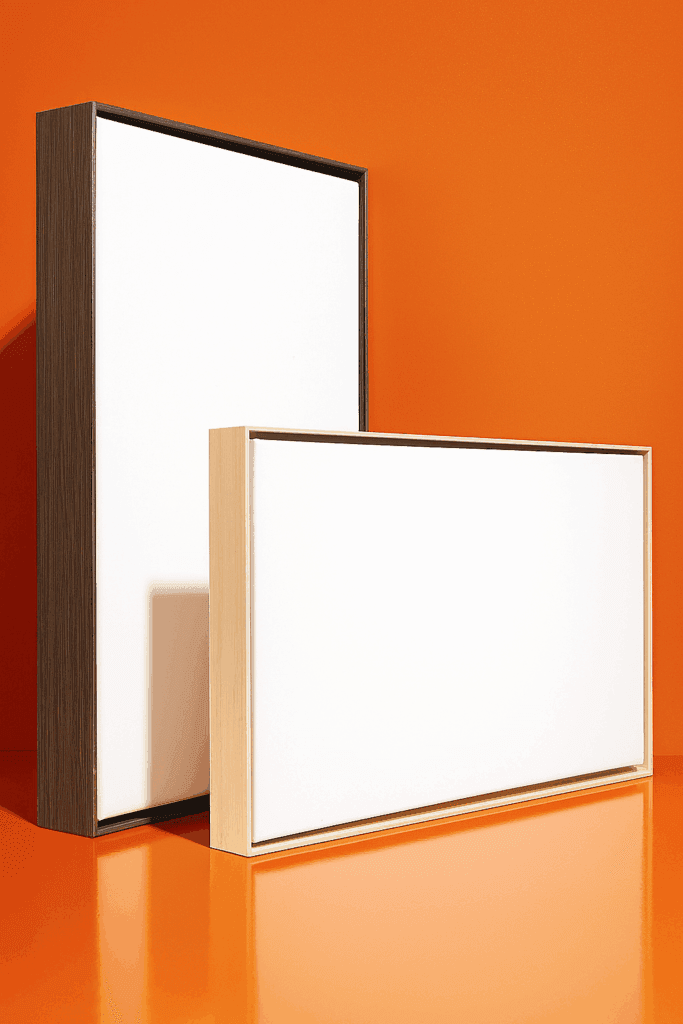
Do you need affordable floating frames for your artworks? The Kolekin frames are the solution!
- Easy assembly at home
- Affordable (but with that gallery look!)
- Free shipping over $50
