


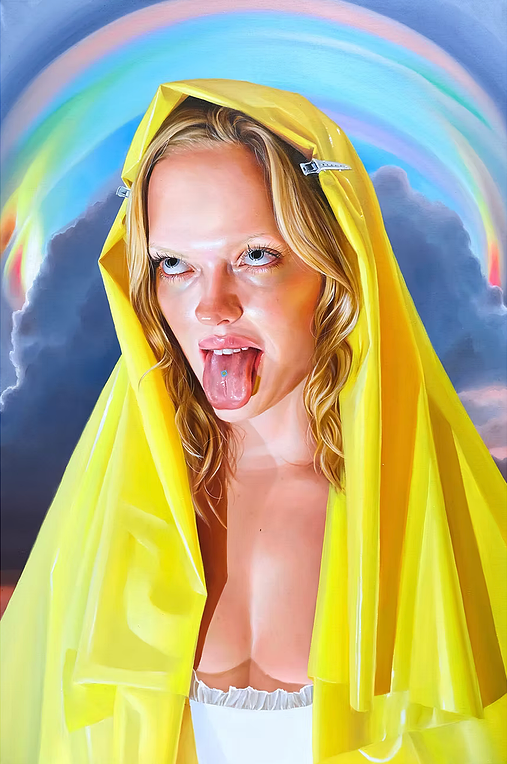
Between alluring photorealism and unsettling subject matter, Roxy Peroxyde explores personal narratives and the tensions within the collective female consciousness. A self-taught Montreal artist, she develops a body of work in which aesthetics draw the viewer in, while the stories she reveals invite them to look beyond appearances.
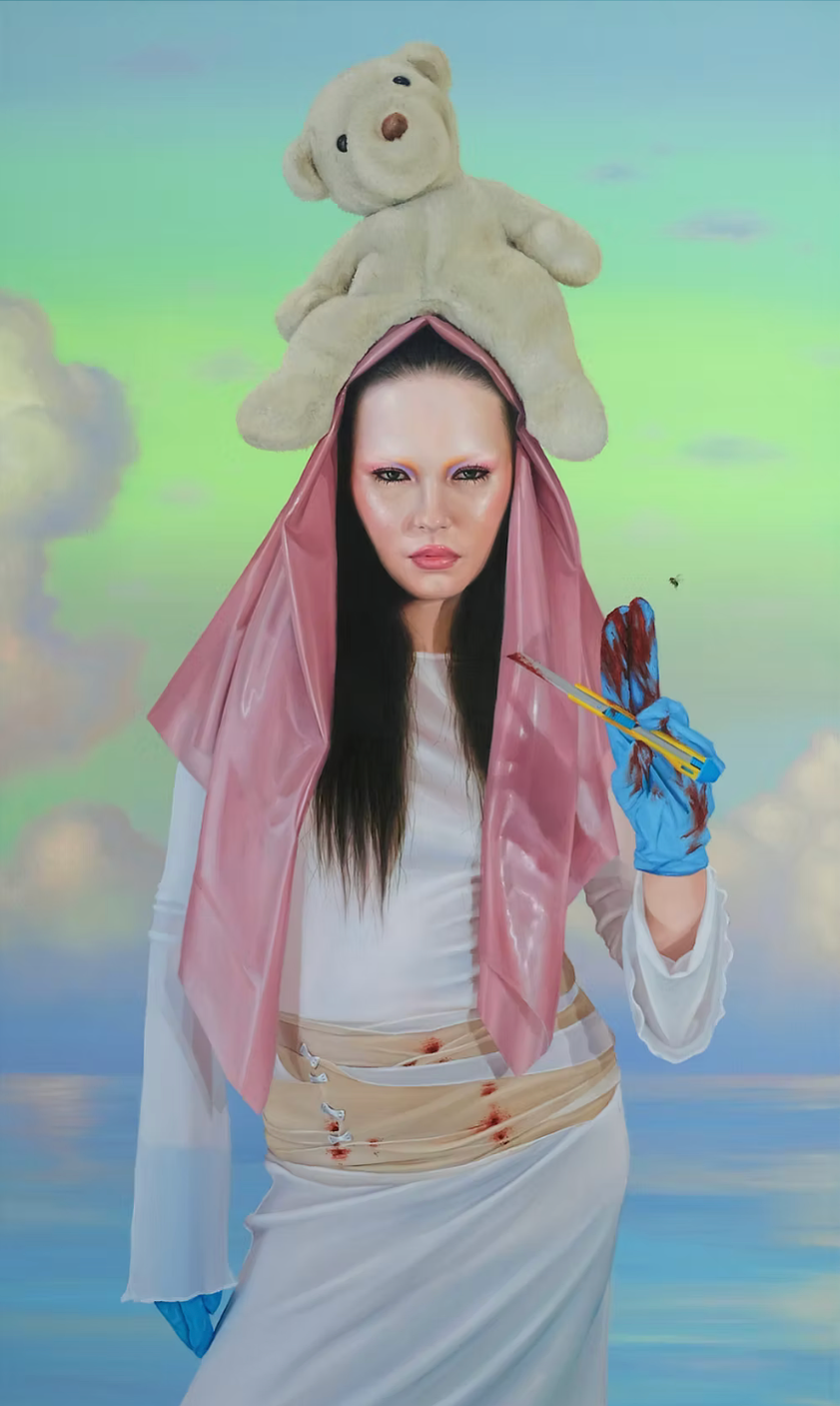
What are the main themes that have run through your work from the beginning, and how have they evolved over the years?
When I look at my body of work as a whole, what I see in the early stages of my career is a search for identity. This eventually evolved into autobiographical narrative work. Each of my pieces carries a fragment of what I was experiencing during a particular phase of my life, but also, in a broader sense, what I recognize in the zeitgeist and, more specifically, in the collective female consciousness. I play with certain themes and tensions that are not traditionally addressed in the world of art and classical painting.
You are self-taught. What advantages has this given you compared with a more traditional academic education?
I believe it allowed me to develop a signature technique. By necessity, when the result I am trying to recreate exists only as a concept, without a step-by-step plan, the result emerges organically and is relatively less influenced by what already exists.
This path is not necessarily suitable for everyone. Some people will only be able to reach their full potential through an introduction to art in an academic setting. I couldn't find the academic environment I was looking for at the time, which led me to learn the medium through trial and error.
The resources we have online today simply weren't available back then. I started in 2008, when the internet was still in its embryonic stage. I struggled to find resources, and searching for them often took more time than simply getting to work. I persevered until I achieved results, sometimes indecent ones, but necessary to learning the craft in every sense of the word.
The second stage, after applying paint to the canvas, is learning to have the courage to set your ego aside, share your work, and remain hopeful that someone, somewhere, will connect with it, even when the work is still at a precarious stage. One day, that hope will become reality, and those moments are what fuel the work and the desire to keep pushing forward. Without them, it is very difficult to persevere.
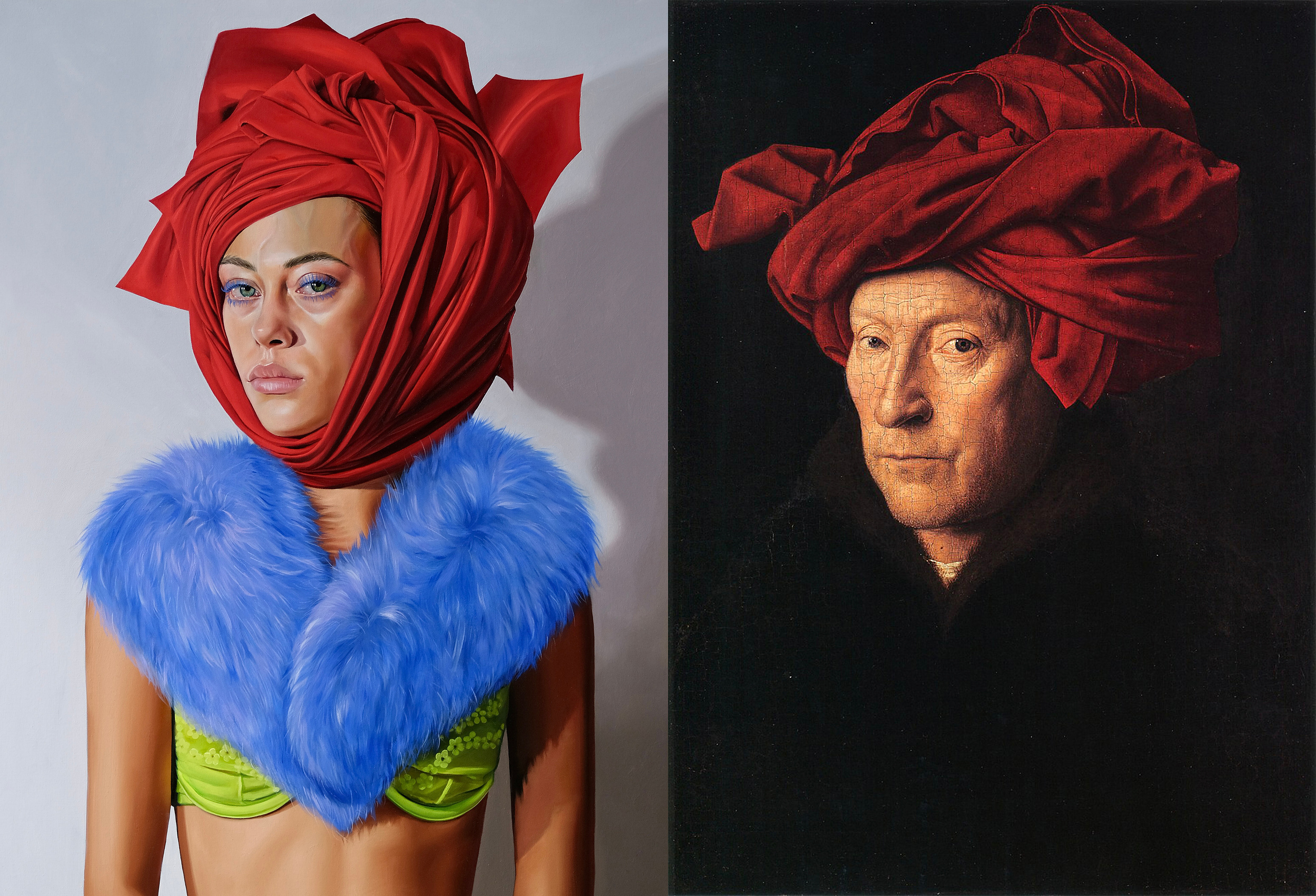
Your work often creates tension between attraction and discomfort, between seductive aesthetics and more complex subject matter. Why is it important for you to maintain this friction in your work?
I believe this friction comes from a desire to be understood. It's a bit like a trap I set. You can easily skim through the work with a light heart, without thinking too much about it on the surface. This is intentional, and it allows me to address much heavier subjects than my color palette might suggest.
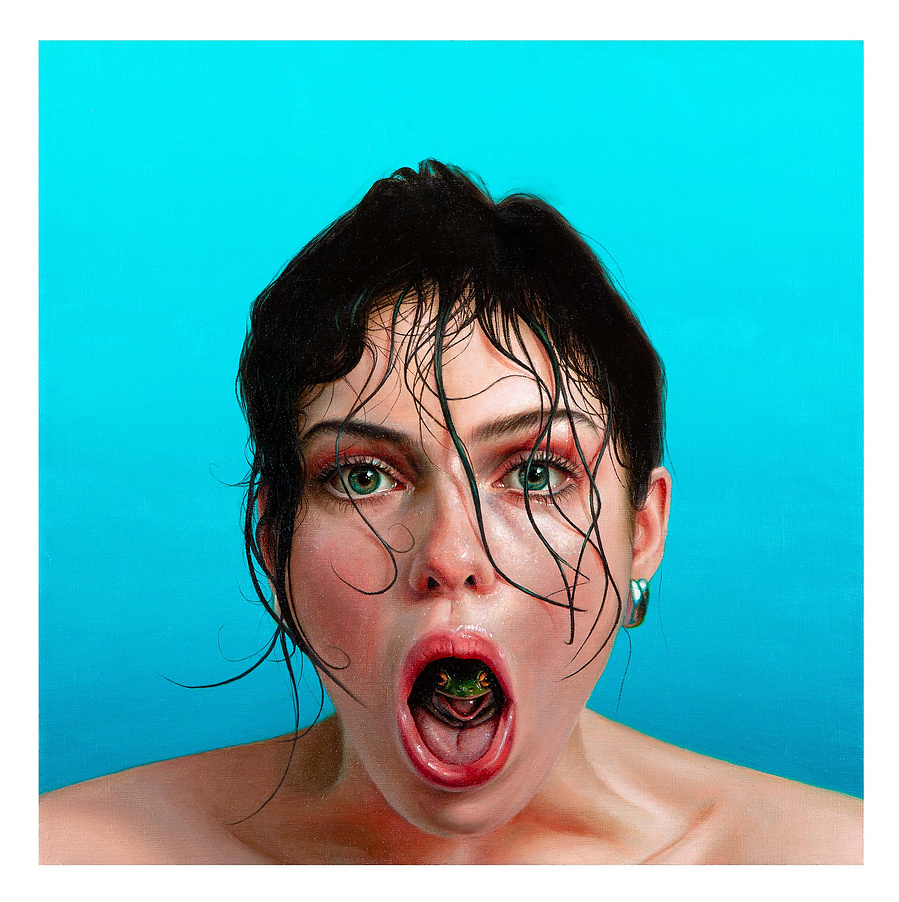
Photorealism demands enormous patience and discipline. How long does a painting take you, and what is your creative process, from beginning to end?
Indeed. The time required for a piece varies greatly and depends on the complexity of what is included in the painting. For example, painting a close-up face takes me about a day's work. But when you add two hands, a denim jacket, a fur collar, a landscape, everything adds up very quickly and can easily amount to two or three weeks of work.
But once an artist reaches a certain point in their career, time becomes an irrelevant factor. The years of accumulated work, expertise, precision, and market value add a dimension that means a work's value can no longer be considered relative to the time spent creating it.
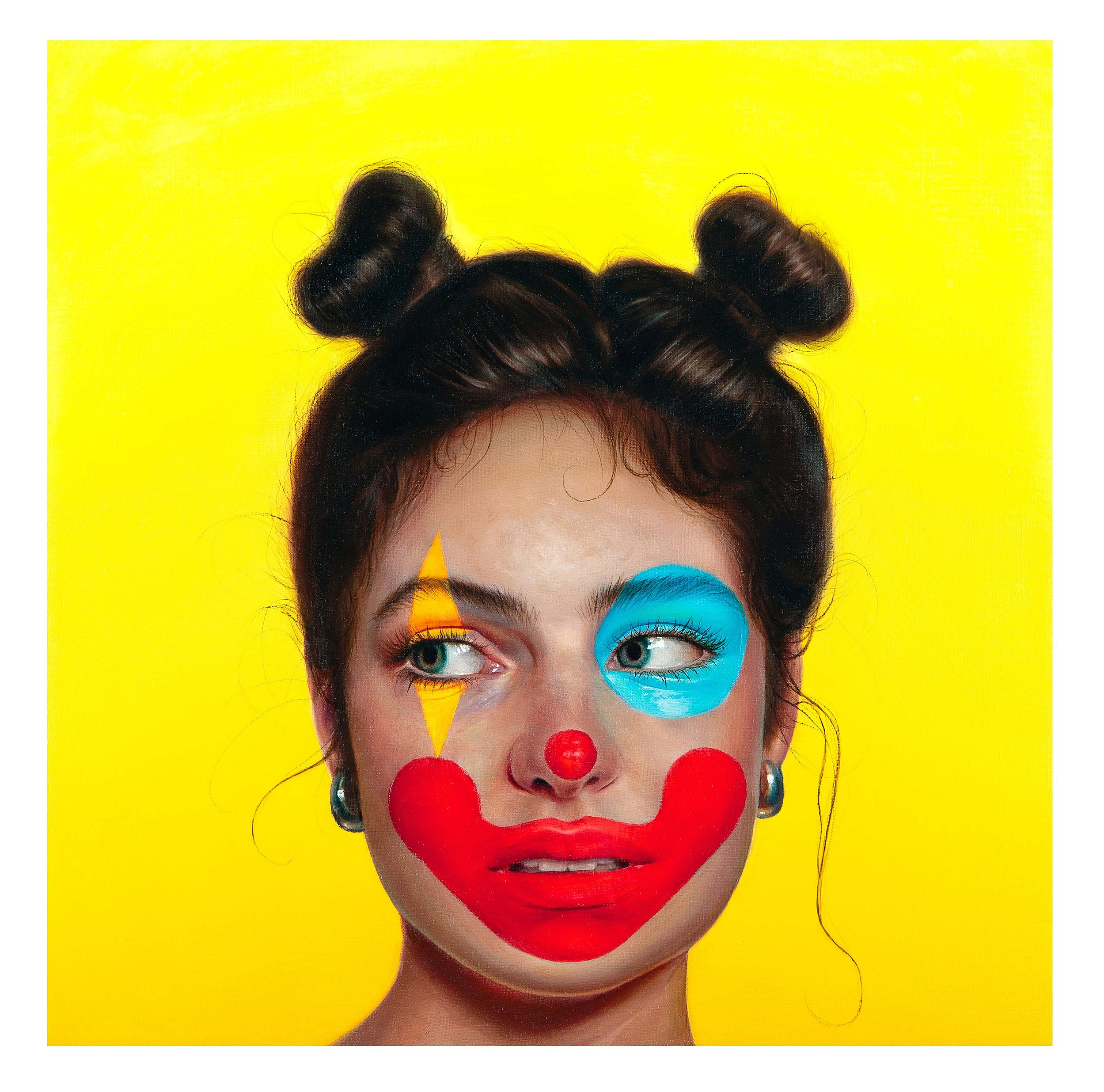
Your titles act as triggers. How do you choose them, and do they come before or after the image?
Most of the time, they come to me once the work is finished, almost as if they already existed somewhere and the artwork exists because its title exists. I've surprised myself with this process several times. The work only fully comes into its own, revealing its full dimension and genius, once the title comes to me.
It can happen in a fraction of a second or take an entire afternoon. Sometimes, I also rely on the perspective of people I trust, who understand the complexity of who I am and my sense of humor.
You champion truth and integrity as principles. What does that mean in practice in an art world often dominated by the market and branding?
Standing up for what is true to me and remaining true to my principles throughout the process means not giving in to the pressures of the market and branding, because doing so would violate the very rule that gave me the career I have today.
Name an artist who inspires you and tell us why.
Andy Warhol. He applied the same principle, under a different guise.
Are there any upcoming projects or exhibitions you would like to tell us about?
Un livre, et un film 🙂
To learn and see more of Roxy Peroxyde's work: Website & Instagram.

Are you looking for affordable floating frames for your artwork? Kolekin frames are the solution!
Easy to assemble at home.
Affordable (but with a gallery-quality look!).
Free shipping on all orders over $50.
