


When choosing a floater frame for canvas art, most people find themselves comparing two popular options: metal floater frames and wood floater frames.
At first glance, the decision seems simple. Wood offers warmth and tradition, while metal provides strength and modern appeal. But advances in materials and manufacturing have created a third option that combines many of the advantages of both: engineered wood look aluminum floater frames.
In this guide, we'll compare metal and wood floater frames across appearance, durability, maintenance, and value to help you determine which option is best for your artwork.
What Is a Metal Floater Frame?
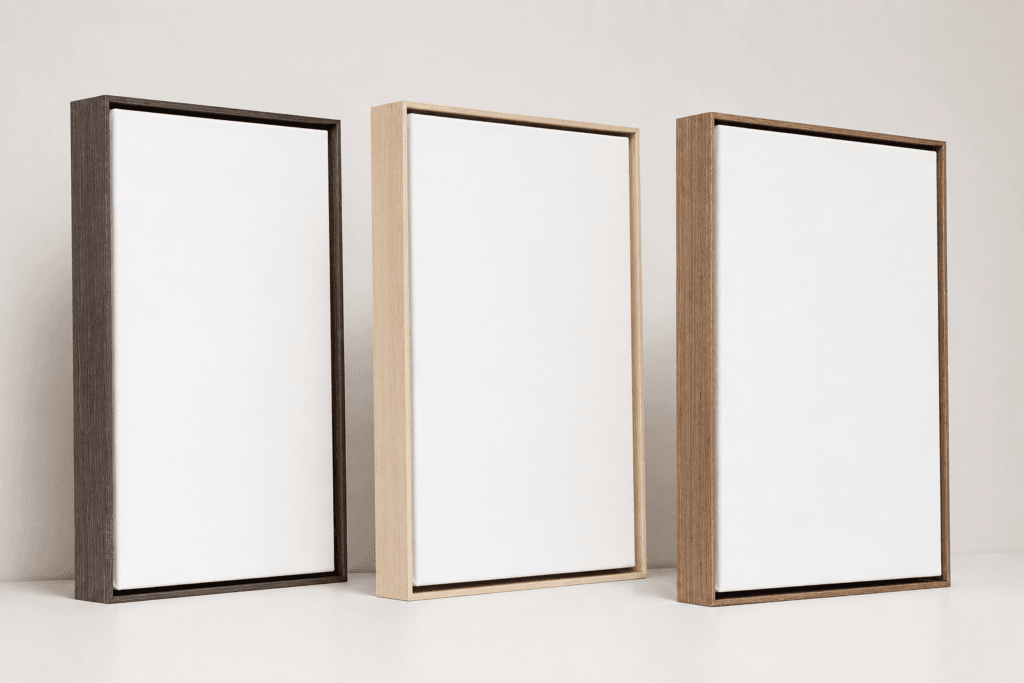
A metal floater frame is typically made from aluminum and designed to surround a stretched canvas while leaving a small gap between the artwork and the frame. This creates the characteristic "floating" effect that gives floater frames their name.
Metal frames have become increasingly popular due to their clean lines, dimensional stability, and contemporary appearance. A metal floating frame can feature an engineered wood finish that offers the look and feel of real wood, like the floating frames offered by Kolekin.
Advantages of Metal Floater Frames
- Lightweight and easy to handle
- Highly resistant to warping and twisting
- Durable and long-lasting
- Consistent finish and dimensions
- Ideal for large canvas artwork
- Excellent resistance to humidity and temperature changes
- Can have the same look as a real wood frame, with a high quality veneer.
Potential Drawbacks
- Some metal finishes can appear cold or industrial
- Limited natural texture compared to real wood
What Is a Wood Floater Frame?
A wood floater frame is made from solid wood and is designed to create the same floating effect around a canvas.
Wood has been used in art framing for centuries and remains popular because of its natural grain, warmth, and handcrafted character.
Advantages of Wood Floater Frames
- Rich natural texture
- Traditional gallery appearance
- Wide variety of stains and finishes
- Complements classic and traditional artwork
- Can be customized by painters and woodworkers
Potential Drawbacks
- Susceptible to warping over time
- Can expand and contract with humidity changes
- Heavier than aluminum
- More prone to cracking and splitting
- Premium hardwood frames can be expensive
Metal Floater Frame vs Wood Floater Frame: Side-by-Side Comparison
| Feature | Metal Floater Frame | Wood Floater Frame |
|---|---|---|
| Appearance | Modern and minimalist | Warm and traditional |
| Weight | Lightweight | Heavier |
| Durability | Excellent | Good |
| Moisture Resistance | Excellent | Moderate |
| Warping Resistance | Excellent | Moderate |
| Maintenance | Minimal | Occasional |
| Consistency | Very high | Varies by wood species |
| Cost | Moderate | Often higher |
| Lifespan | Very long | Depends on environment |

Appearance: Modern vs Traditional
For many buyers, appearance is the deciding factor.
Wood frames offer a timeless aesthetic that highlights the natural beauty of the material itself. The grain patterns and subtle variations create a handcrafted look that many artists appreciate.
Metal frames, on the other hand, emphasize simplicity. Their clean edges and precise construction fit naturally into contemporary interiors, modern galleries, and minimalist spaces.
The challenge is that many people love the warmth of wood but want the performance benefits of metal.
This is where engineered wood look aluminum frames have changed the conversation.
Durability and Stability
When it comes to longevity, aluminum has a clear advantage.
Unlike wood, aluminum does not absorb moisture. It won't swell during humid summers or shrink during dry winters. It also resists twisting, cracking, and warping, even in larger frame sizes.
For artists and collectors displaying artwork for years, dimensional stability matters.
Solid wood remains an excellent material, but it is still a natural product. Environmental conditions can affect it over time, particularly with large-format canvases.
If durability is your top priority, aluminum is difficult to beat.
Weight and Installation
Large canvas artwork can become surprisingly heavy.
Because aluminum is lighter than solid wood, metal floater frames are often easier to transport, assemble, and hang. The reduced weight places less stress on wall anchors and mounting hardware.
This advantage becomes increasingly important as canvas sizes grow.
For artists who frequently ship artwork or participate in exhibitions, lighter framing can also reduce transportation challenges.
Cost Considerations
Custom solid wood framing can become expensive, especially when hardwoods and custom finishes are involved.
Aluminum frames often benefit from more consistent manufacturing processes, helping to keep costs predictable while maintaining high quality.
The result is a framing solution that delivers professional presentation without the premium pricing often associated with custom wood framing.
The Best of Both Worlds: Engineered Wood Look Aluminum Frames
For years, buyers had to choose between the beauty of wood and the performance of aluminum.
Today, that tradeoff is no longer necessary.
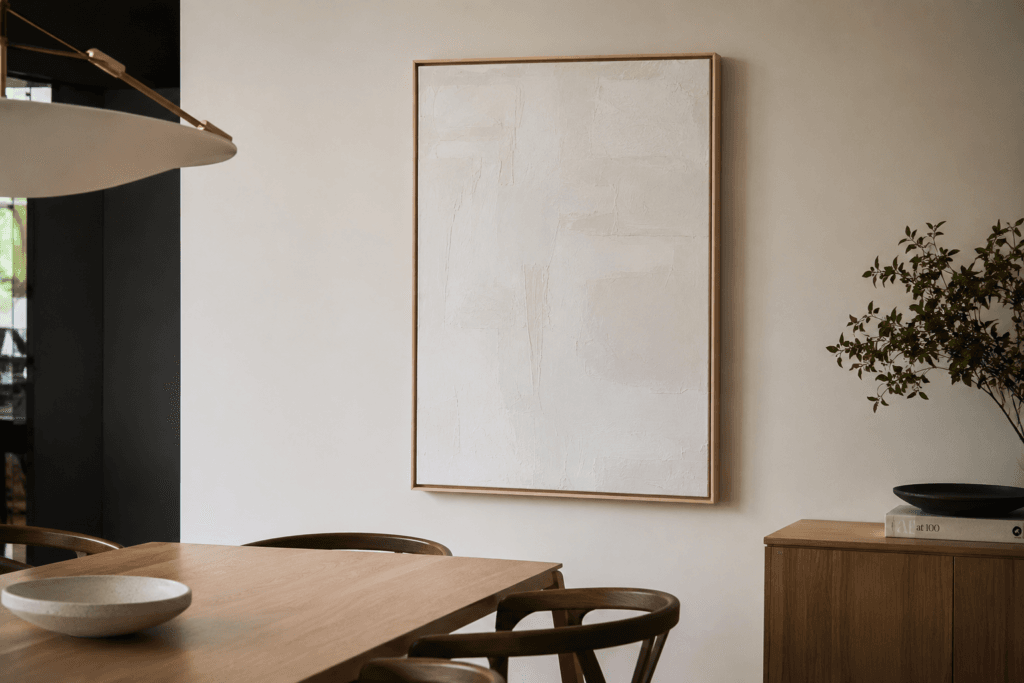
Modern engineered wood finishes can closely replicate the appearance of natural wood while retaining all the structural advantages of aluminum.
This approach delivers:
- The warmth and elegance of wood
- The strength and stability of aluminum
- Reduced maintenance
- Greater durability
- Consistent quality across hundreds of sizes
For many artists, it represents the sweet spot between aesthetics and performance.
Why Kolekin Frames Take This Approach
At Kolekin, our floater frames are built from aluminum but feature engineered wood finishes designed to capture the look of real wood.
The goal is simple: combine the best qualities of both materials.
Authentic Wood Appearance
Our Walnut, Oak, and Dark Oak finishes bring warmth and texture that complement a wide variety of artwork styles, from contemporary abstracts to traditional paintings.
The result is a frame that looks at home in galleries, studios, and living spaces alike.
Aluminum Performance
Behind the finish is a lightweight aluminum structure that offers:
- Excellent dimensional stability
- Resistance to warping
- Long-term durability
- Easy handling and installation
Additional Flexibility
Unlike many finished metal frames, Kolekin's engineered wood surface can also be customized.
Artists and DIY enthusiasts can:
- Apply stain
- Apply clear varnish
- Paint the frame
- Create custom finishes to match specific projects
This flexibility provides many of the creative possibilities traditionally associated with wood while retaining the performance advantages of aluminum.
Professional Results Without Custom Framing Costs
With hundreds of ready-made sizes available, artists can achieve a gallery-quality presentation without the delays and costs often associated with custom framing.
Who Should Choose a Metal Floater Frame?
A metal floater frame may be ideal if you:
- Prefer modern interiors
- Need maximum durability
- Frame large canvases
- Want minimal maintenance
- Live in areas with significant humidity changes
Who Should Choose a Wood Floater Frame?
A wood floater frame may be ideal if you:
- Prefer traditional aesthetics
- Value natural wood grain
- Want a handcrafted appearance
- Are framing classic or rustic artwork
- Enjoy custom woodworking projects
Final Verdict
There is no universally "best" material for every situation.
Solid wood frames remain beautiful and timeless. Aluminum frames offer exceptional durability and stability.
However, for many artists, collectors, and homeowners, engineered wood look aluminum frames provide the strongest overall balance.
They combine the warmth and character of wood with the reliability and performance of aluminum, eliminating many of the compromises traditionally associated with either material.
If you're looking for a modern canvas framing solution that delivers professional presentation, long-term durability, and the appearance of real wood, an engineered wood look aluminum floater frame may be the best of both worlds.
