


Choosing the right frame can completely transform the appearance of your artwork. Whether you're displaying an original painting, a canvas print, or a professional photograph, the frame influences not only the style of the piece but also how viewers perceive it.
Two of the most popular options are the floater frame and the traditional frame. While both protect and showcase artwork, they create very different visual effects and are designed for different types of pieces.
In this guide, you'll learn exactly how floater frames compare to traditional frames, their advantages, disadvantages, and how to determine which one is best for your artwork.
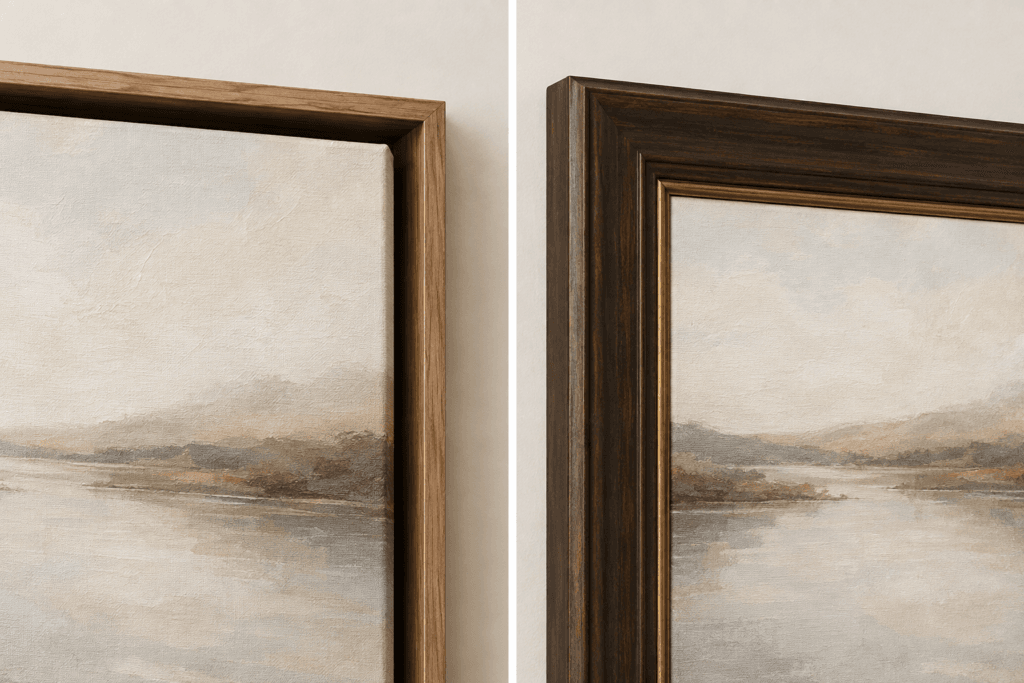
What Is a Floater Frame?
A floater frame, sometimes called a floating frame, is specifically designed for stretched canvas artwork.
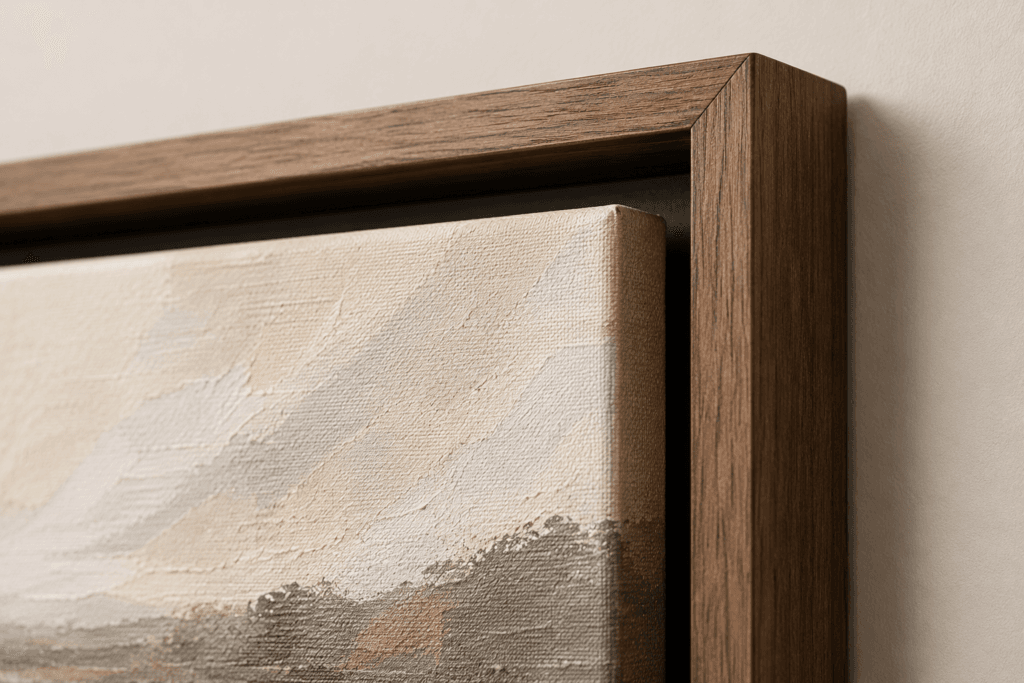
Instead of covering the edges of the canvas, the frame surrounds it while leaving a small, even gap between the artwork and the frame itself. This creates the illusion that the canvas is floating inside the frame, giving the artwork depth and a refined gallery appearance.
Unlike conventional picture frames, floater frames do not require glass, mats, or backing boards.
They are especially popular for:
- Acrylic paintings
- Oil paintings
- Mixed media artwork
- Gallery wrapped canvas printshttps://kolekin.com/color/walnut-veneer/
- Contemporary photography on canvas
Modern aluminum floater frames with realistic wood finishes combine the warmth of wood with the durability and stability of aluminum, making them an increasingly popular choice for artists and homeowners alike.
What Is a Traditional Frame?
A traditional frame surrounds artwork directly.
Depending on the artwork, it may include:
- Glass
- Mat board
- Backing board
- Clips or mounting hardware
Traditional frames are commonly used for:
- Paper artwork
- Watercolors
- Prints
- Posters
- Photographs
- Certificates
They can also be used for canvas artwork, although they typically cover part of the canvas edge and create a flatter appearance.
Traditional frames are available in countless decorative styles, from classic carved wood to ornate gold finishes.

Floater Frame vs Traditional Frame: Key Differences
| Feature | Floater Frame | Traditional Frame |
|---|---|---|
| Designed for: | Stretched canvas | Paper, prints, photos, canvas |
| Appearance: | Floating effect with visible canvas edges | Artwork touches or sits behind frame |
| Glass: | Not required | Often required |
| Modern style: | Excellent | Good |
| Traditional décor: | Good | Excellent |
| Gallery presentation: | Excellent | Good |
| Installation: | Simple | Often more complex |
| Edge visibility: | Visible | Hidden |
Appearance
The biggest difference is visual.
A floater frame creates separation between the canvas and the frame, making the artwork appear lighter and more dimensional.
A traditional frame visually encloses the artwork, producing a more classic and formal presentation.
If your goal is a clean, contemporary aesthetic, the floater frame usually delivers a stronger visual impact.
Which Frame Protects Artwork Better?
Protection depends on the type of artwork.
For stretched canvas paintings, a floater frame protects the vulnerable edges and corners while leaving the painted surface exposed.
For artwork on paper, a traditional frame with UV-protective glass provides better protection against dust, moisture, fingerprints, and fading.
Neither option is universally better. Each is designed for different materials.
Which Style Fits Your Home?
Choose a Floater Frame if you like:
- Modern interiors
- Scandinavian design
- Minimalist décor
- Contemporary artwork
- Abstract paintings
- Clean architectural lines
The floating effect naturally complements modern spaces without distracting from the artwork.
Choose a Traditional Frame if you prefer:
- Classic interiors
- Vintage décor
- Ornate furniture
- Historical artwork
- Family portraits
- Decorative moldings
Traditional frames often become part of the decoration themselves.
Which Is Easier to Install?
Most modern canvas framing kits allow the canvas to be centered inside the frame using screws attached from the back. No glass or complicated mounting process is required.
Traditional frames may require:
- Matting
- Glass cleaning
- Artwork mounting
- Flexible points
- Backing boards
- Hanging wire installation
For DIY users framing stretched canvases, floater frames are generally the easier option.
Which Frame Is Better for Artists?
Professional artists increasingly choose floater frames because they:
- preserve the full size of the artwork
- reveal the painted edges
- create a gallery-quality presentation
- look modern in exhibitions
- complement both original paintings and canvas prints
Many galleries also favor floater frames because they provide a clean, consistent presentation across multiple works.
Aluminum Floater Frames vs Wood Frames
While traditional floater frames were often made from solid wood, modern aluminum versions offer several advantages.
They are:
- lighter
- stronger
- resistant to warping
- resistant to humidity
- available in hundreds of sizes
- finished with realistic wood-look coatings
This combination provides the appearance of natural wood with the long-term durability of metal.
Which Frame Should You Choose?
Choose a floater frame if you want:
- a modern appearance
- a professional gallery look
- visible canvas edges
- easy installation
- a minimalist aesthetic
- artwork that appears to "float"
Choose a traditional frame if you want:
- decorative molding
- glass protection
- classic interiors
- framing for paper artwork
- ornate finishes
Frequently Asked Questions
Can you put a floater frame on any canvas?
Floater frames are designed for stretched canvases. The frame must match both the canvas dimensions and its thickness.
Do floater frames require glass?
No.
Canvas artwork does not require glass, allowing the texture and brushstrokes to remain visible.
Are floater frames only for modern art?
Although popular with contemporary artwork, floater frames also complement landscapes, portraits, wildlife paintings, and traditional oil paintings.
Are aluminum floater frames durable?
Yes.
High-quality aluminum frames resist moisture, twisting, and seasonal movement better than many solid wood frames while remaining lightweight.
Final Thoughts
Both floater frames and traditional frames have their place. The best choice depends on the artwork, the room, and the style you want to achieve.
If you're framing a gallery wrapped canvas, a floater frame offers one of the cleanest and most professional presentations available today. Its floating effect highlights the artwork without overpowering it, making it a favorite among artists, galleries, interior designers, and homeowners.
Whether you're displaying an original painting or a canvas print, investing in a high-quality aluminum floater frame can dramatically enhance the finished piece while providing lasting durability and timeless style.
