


Discover the journey of Toronto-based visual artist Emmette Lewis. In this interview, she shares intimate reflections on identity, diasporic memory, and materiality, exploring the tension between her South African roots and life in Canada.
What led you to visual arts, and at what point did you know it would be more than a passion?
Growing up, I was always immersed in artistic environments. My aunt was a painter, and I spent many weekends in her studio taking lessons and absorbing everything I could. Art was also the only subject I truly enjoyed in school, so I naturally gravitated toward every creative opportunity available to me. Beyond making art, I was also deeply fascinated by it as a subject of study. I felt compelled to learn everything I could about its history, theory, and role within contemporary culture. I knew from a young age that I wanted to be an artist although I couldn't really conceptualize it as a career. Rather than having a concrete plan, I simply followed what felt instinctive. I still am trying to navigate my place in Toronto’s market but I feel it has finally found some solid ground. I was also very fortunate that my parents encouraged me to pursue art. I feel I owe my entire career to their support.
You grew up between South Africa and British Columbia before settling in Toronto. How has this geographic path shaped the way you see identity, and how does that show up in your art?
From both a material and conceptual standpoint, I draw inspiration from South Africa, British Columbia, and Toronto. Each place has its own distinct artistic language, and it’s a privilege to be surrounded by such rich, vibrant creative energy. Those places are all artistic zeniths. My experience in South Africa compared to Canada are vastly opposing realities. Though they are both home, they come with different understandings of what home means. When my parents immigrated to Canada, they made prevalent efforts to preserve our South Africa traditions and culture. However, growing up away from an everyday engagement with that culture made me only understand it at a distance. So as a result, when I returned to S.A, even though I was with my family, I always felt like a tourist. And being in B.C, I never felt like I was home. It made me see identity as not a singular, linear state of being but something in constant flux. We are constantly adapting and shifting between our environments. It's important to hold onto the parts of yourself that don't neatly fit within expectations or predefined boxes. These experiences also inspired me to discuss themes of state imposed identity, belonging and immigration in my art.
You sometimes incorporate passports, stamps, or other family archival documents into your canvases. How do you choose these objects, and what do they bring that painting alone can't say?
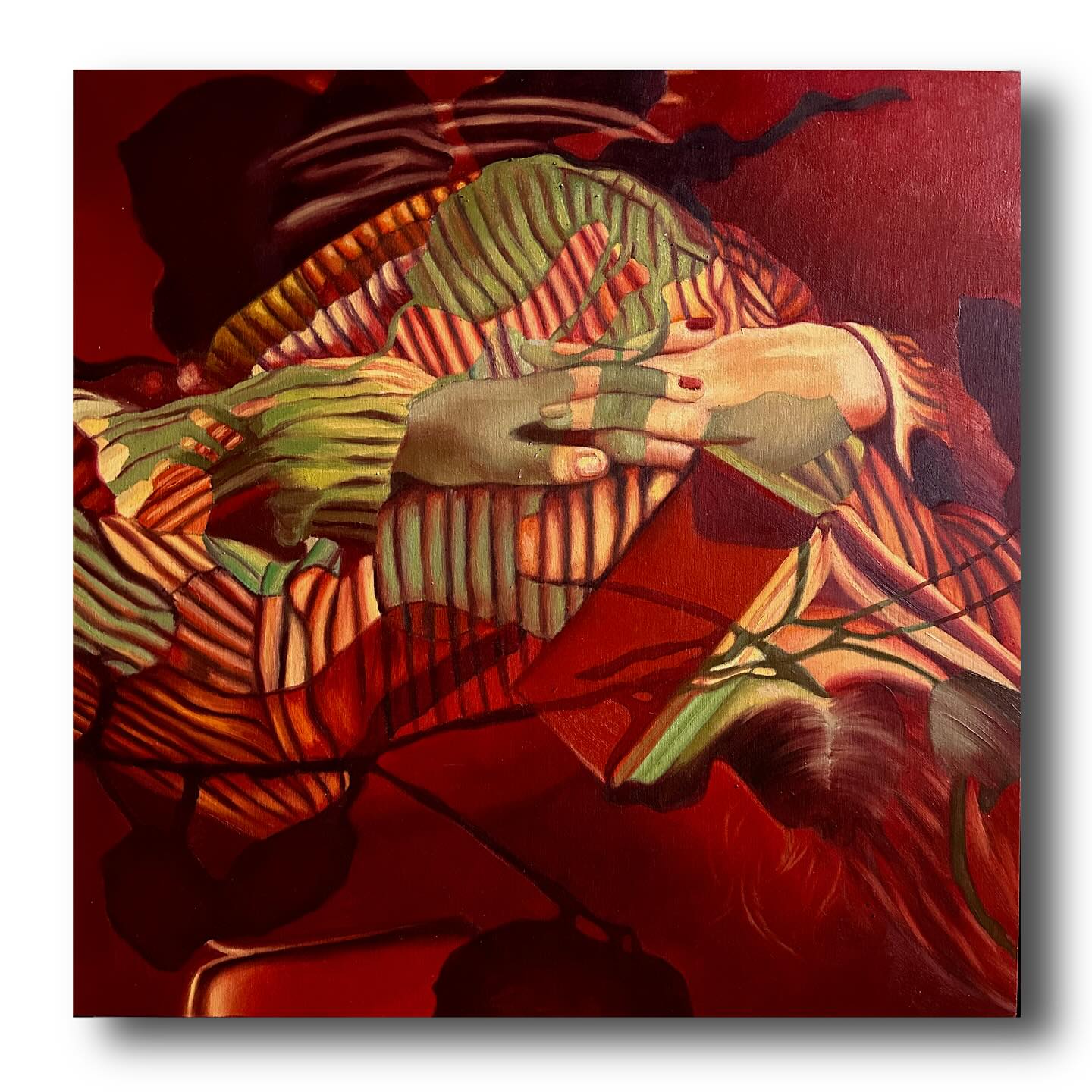
Working with physical materiality allows me to intimately engage with the histories, memories, and stories I am exploring in my work. I also find these objects to be some of the most compelling forms of evidence because they carry a tangible connection to the people and places they come from. The process of incorporating them is very intuitive; some works require their physical presence, while others are more effective through painting alone. I only introduce these materials when their inclusion strengthens the relationship between the object and the narrative being explored. Personally, being geographically removed from familial materials and objects in South Africa, working with the few archival items I have becomes a way of reconnecting with that home. There is something powerful about introducing a raw, unconventional, and deeply personal material into the surface of a painting. My intention is to highlight how these materials have not only contributed to my personal understanding of identity, but have also been shaped by larger structures such as borders, citizenship, and bureaucratic systems. The physical presence of these objects carries histories that I may never fully know or experience firsthand, yet through their transformation within the artwork they take on new meanings.
You talk about diaspora as a space "between two worlds." How does this in-betweenness translate visually in your compositions?
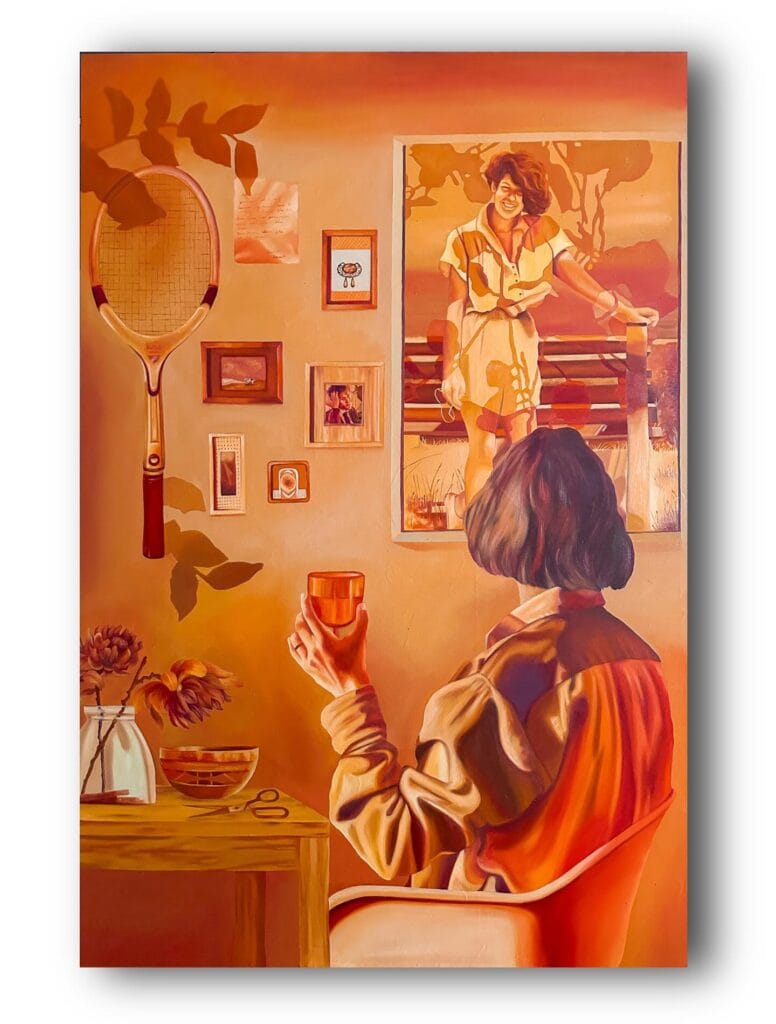
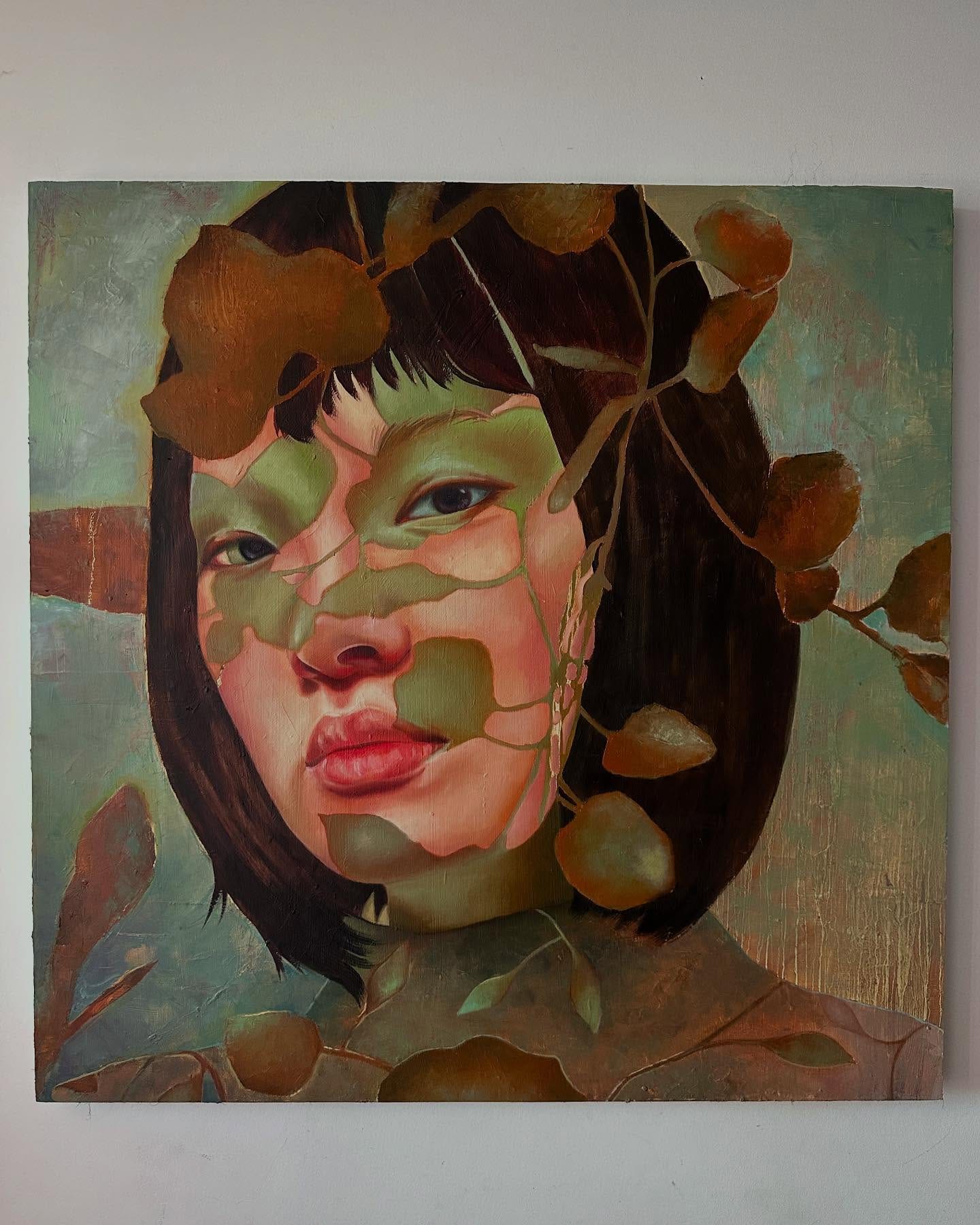
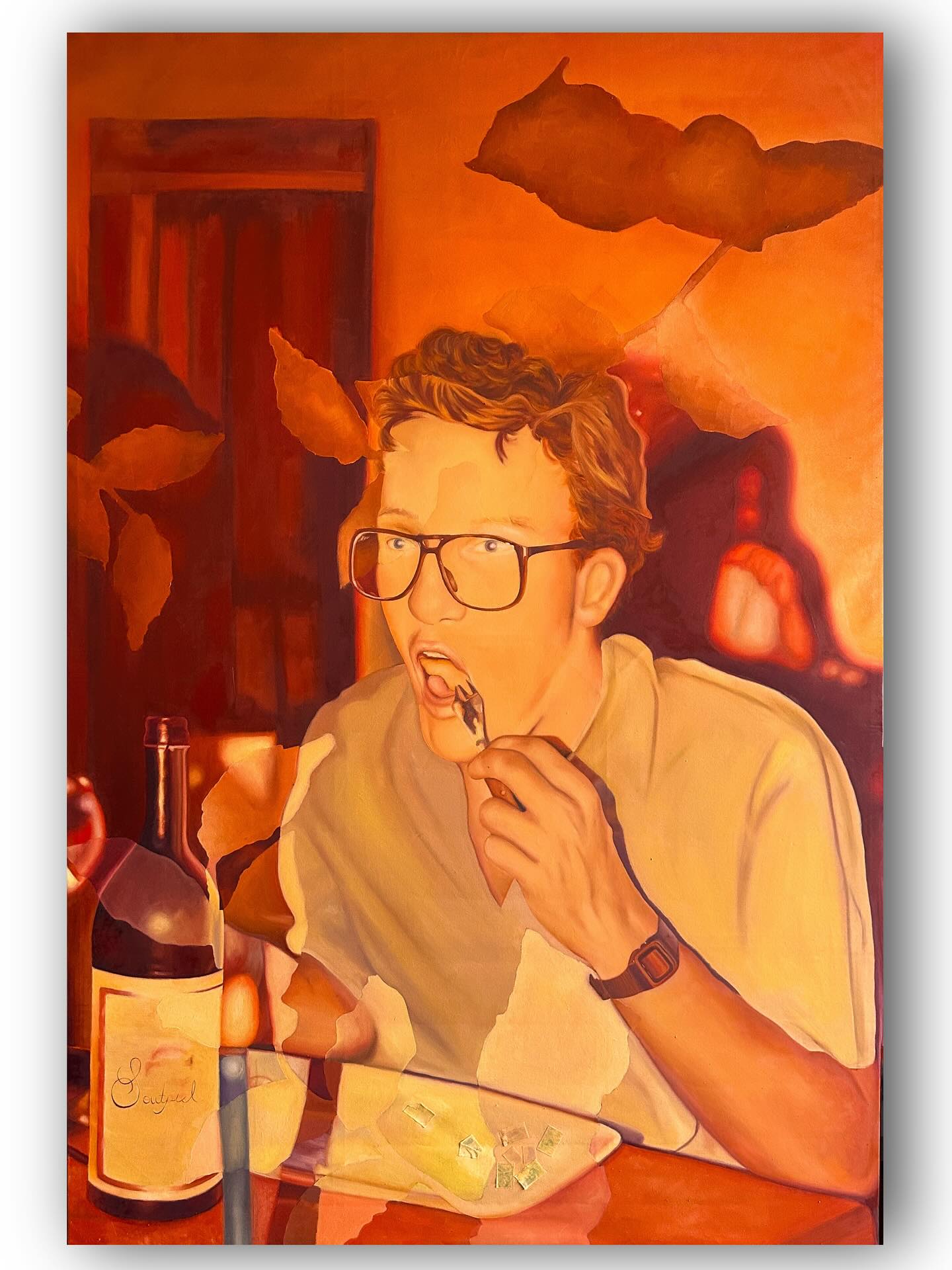
My works are primarily based on family photographs, often images of my parents and relatives in South Africa. I use these photographs as a way of engaging with the parts of my heritage that I have limited access to such as family celebrations, traditions, music, food, moments that make belonging. Rather than relying on overt symbols, I am more interested in the everyday, lived experiences. Visually, I approach this sense of “betweenness” through ideas of absence and interruption. The red and burnt yellow tones throughout my work are meant to evoke this emotional sensation of warmth, like returning home or being surrounded by loved ones. I often introduce liminal interventions or floral silhouettes that partially obscure and transform the original photographs. These interruptions create a space between what is present and what is missing, allowing me to insert myself and my perspective without completely disrupting them. I also alter the image by adding little nods or symbols indicative of B.C or Toronto that are hidden in the paintings imagery. In doing so, I create my own form of self documentation.
Can you describe how a canvas comes to life for you, from the initial idea to the finished piece?
The process is honestly completely random. I will see a photograph or have an idea sporadically pop into my head, and I immediately know I need to paint it. I never make preliminary sketches or practice studies. I usually dive into the work, cross my fingers and figure everything out in the process. Although the beginning is instinctive, the actual conduction of painting is extremely meticulous for me. I hate seeing sharp edges or lines so I spend hours just blending, even if a line is invisible to the viewer. The piece feels completed when that desire to paint the image has faded away.
Oil seems to be your medium of choice. What draws you to it so strongly?
I actually have never used anything else as a primary medium. The first materials I got access to were oil sticks and I immediately fell in love with them. I love working large scale, so some pieces can take weeks or even months to complete. Oil paint allows me to step back, evaluate, and reflect on the work, then return to it later without losing the ability to manipulate the surface. I find that painting with oils is almost like sculpting with a brush on canvas. The medium is incredibly flexible and malleable; you can build up layers, texture, and depth in a way that feels so powerful.
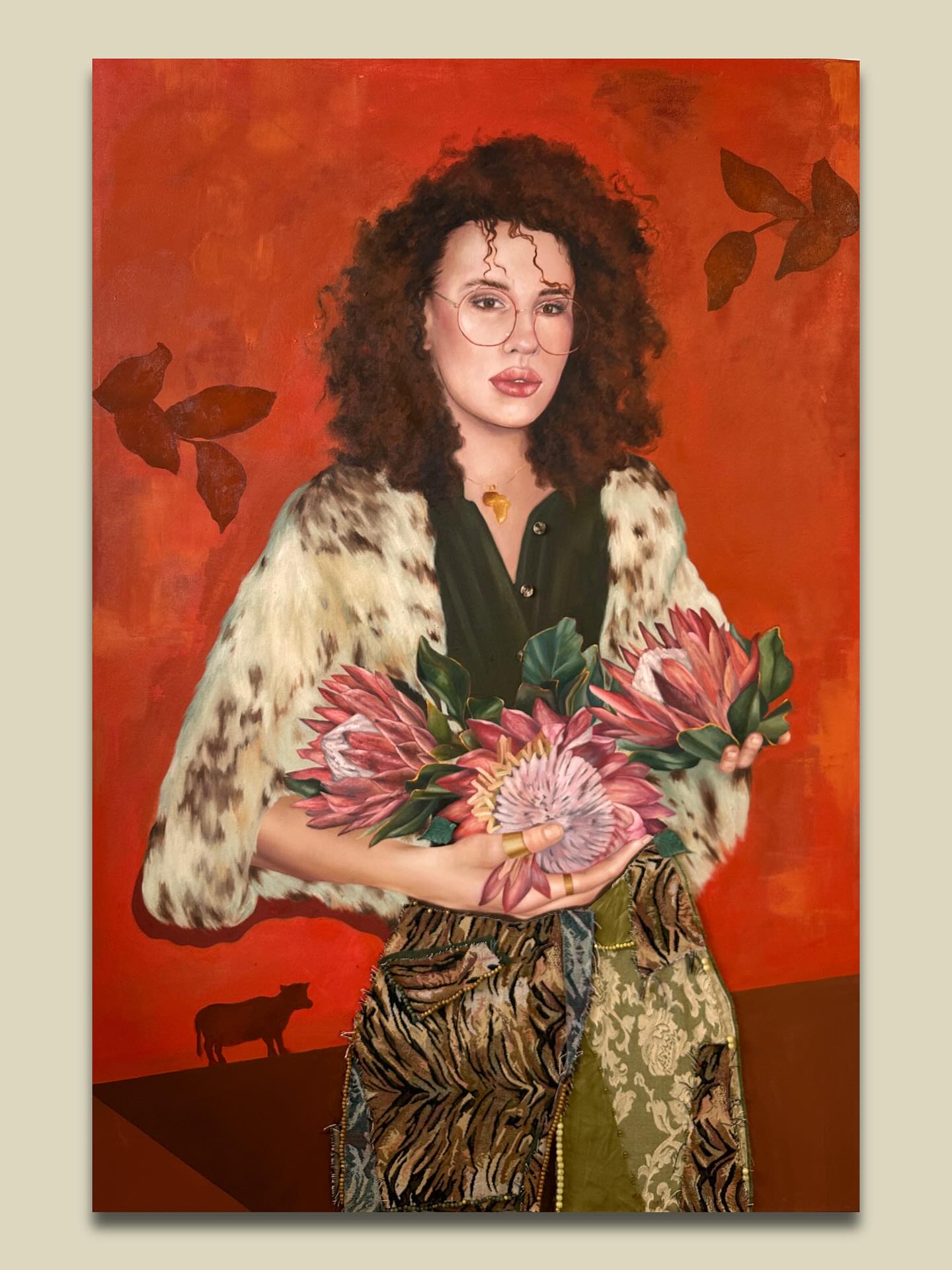
Name an artist who inspires you and tell us why.
As all portrait obsessed people do, I love Jenny Saville. I saw her work in person and have never had such a visceral, emotional reaction to an artwork. Her ability to capture expressions is unlike anything I have ever seen. I am equally as fascinated by the technical execution and emotional narratives from Njideka Akunyili Crosby. Her ability to create depth and form through collage is pure genius.
Do you have any upcoming projects or exhibitions you'd like to share with us?
I am currently doing a residency at Cedar Ridge Creative Centre, the exhibition will be held throughout September! I am also a Summer Guest Artist at Ingram Gallery.
To learn more about Emmette Lewis work: Website and Instagram.
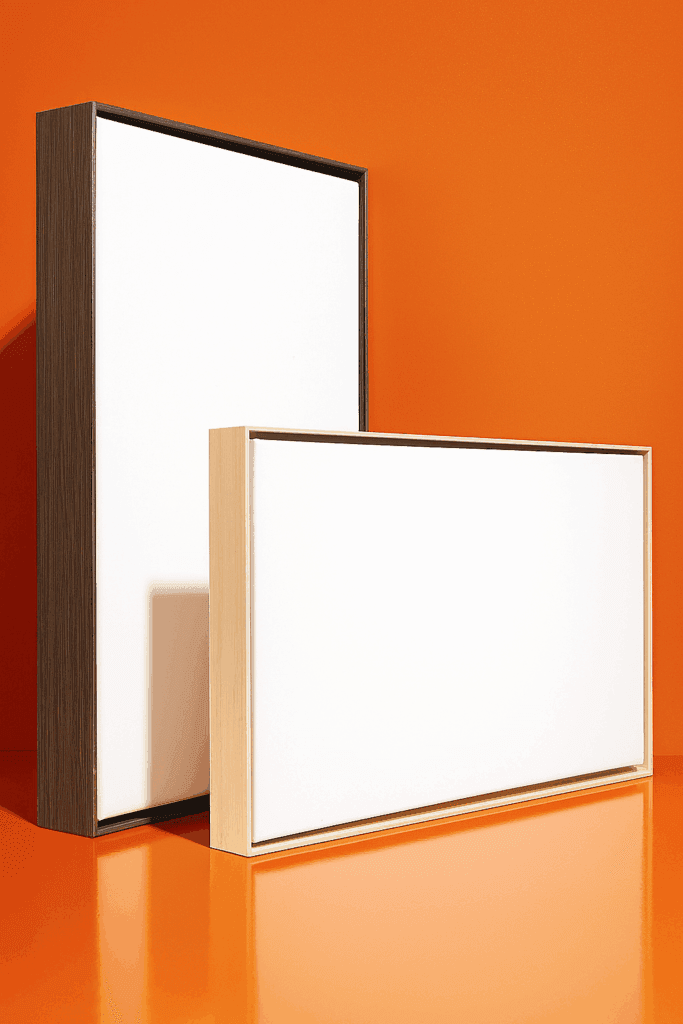
Are you looking for affordable floating frames for your artwork? Kolekin frames are the solution!
- Easy at-home assembly
- Affordable (but with a gallery look!)
- Free shipping on orders over $50
