


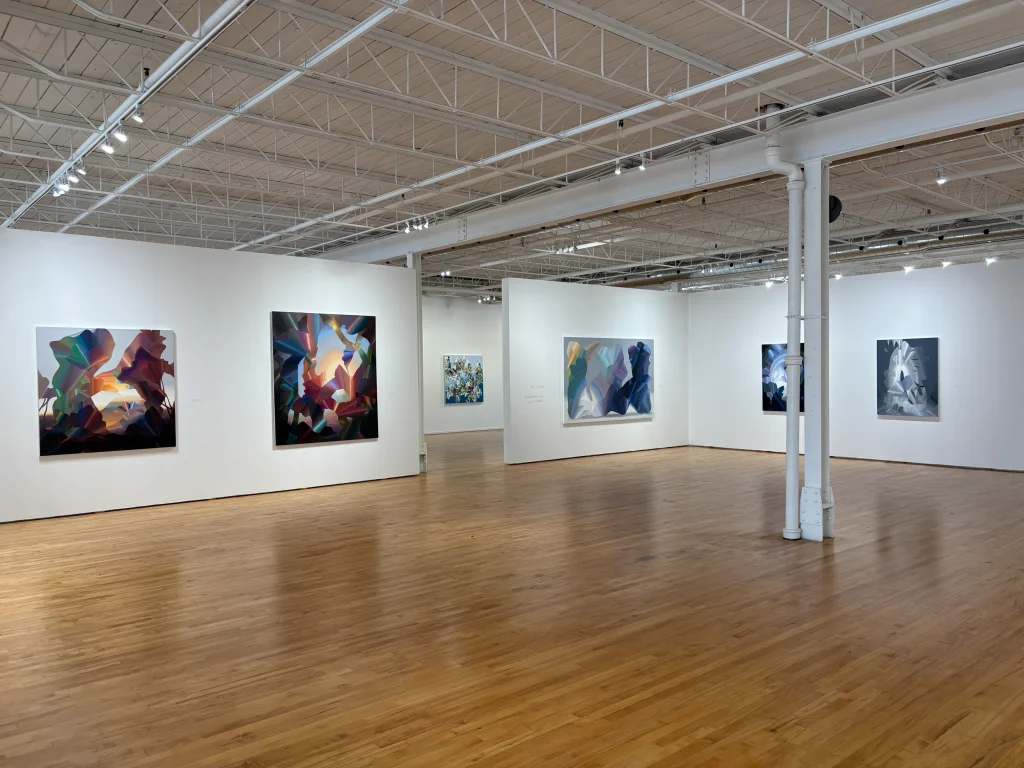
Vancouver-based painter Eric Louie creates imagined sculptural objects that inhabit luminous, otherworldly spaces. Layered gradients shimmer like metal, where nature meets technology in the spirit of Art Nouveau and Art Deco. He speaks with us about Alberta and the West Coast, his studio routine, and the dialogue between one painting and the next.
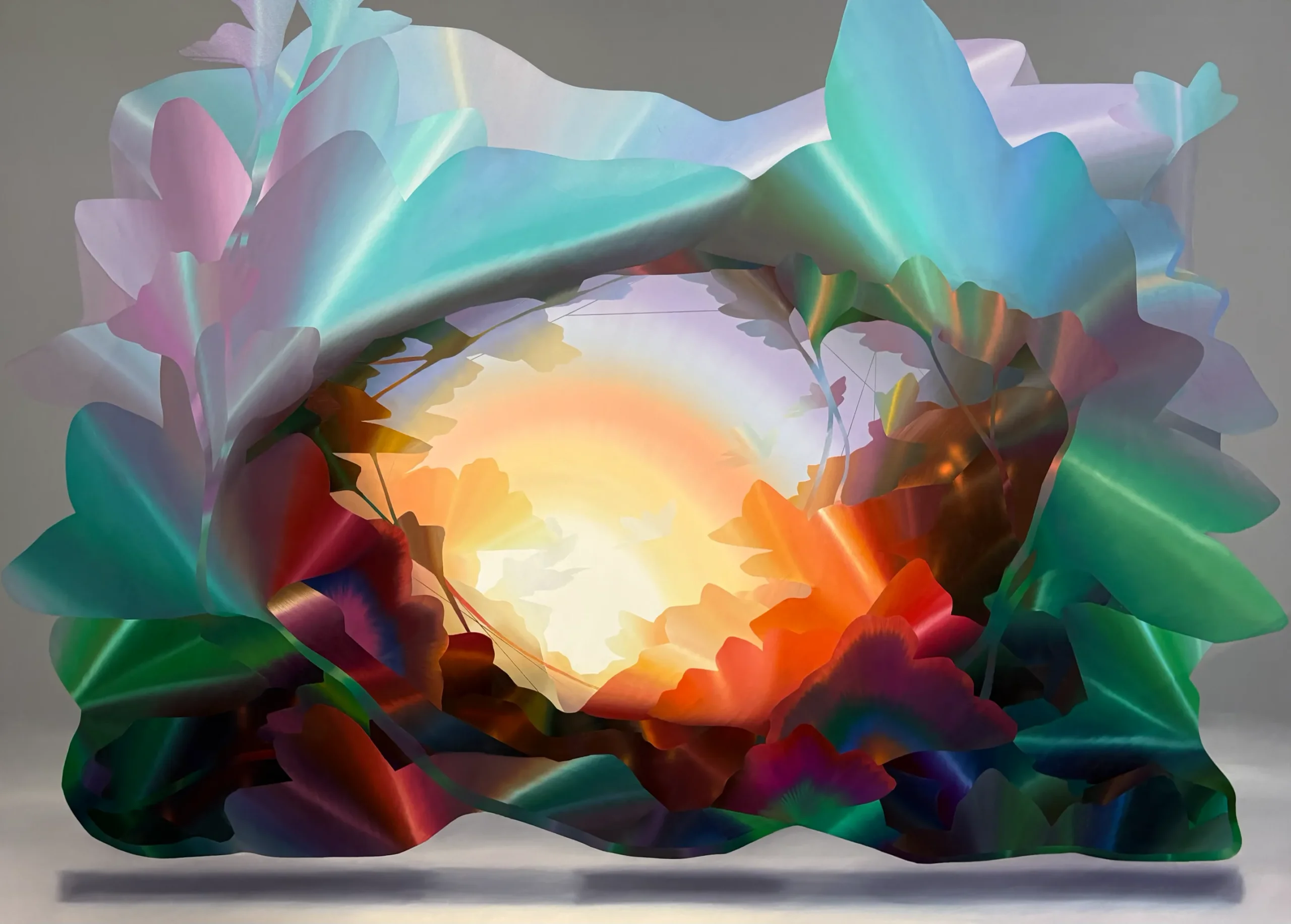
For those discovering your work for the first time, how would you describe your art?
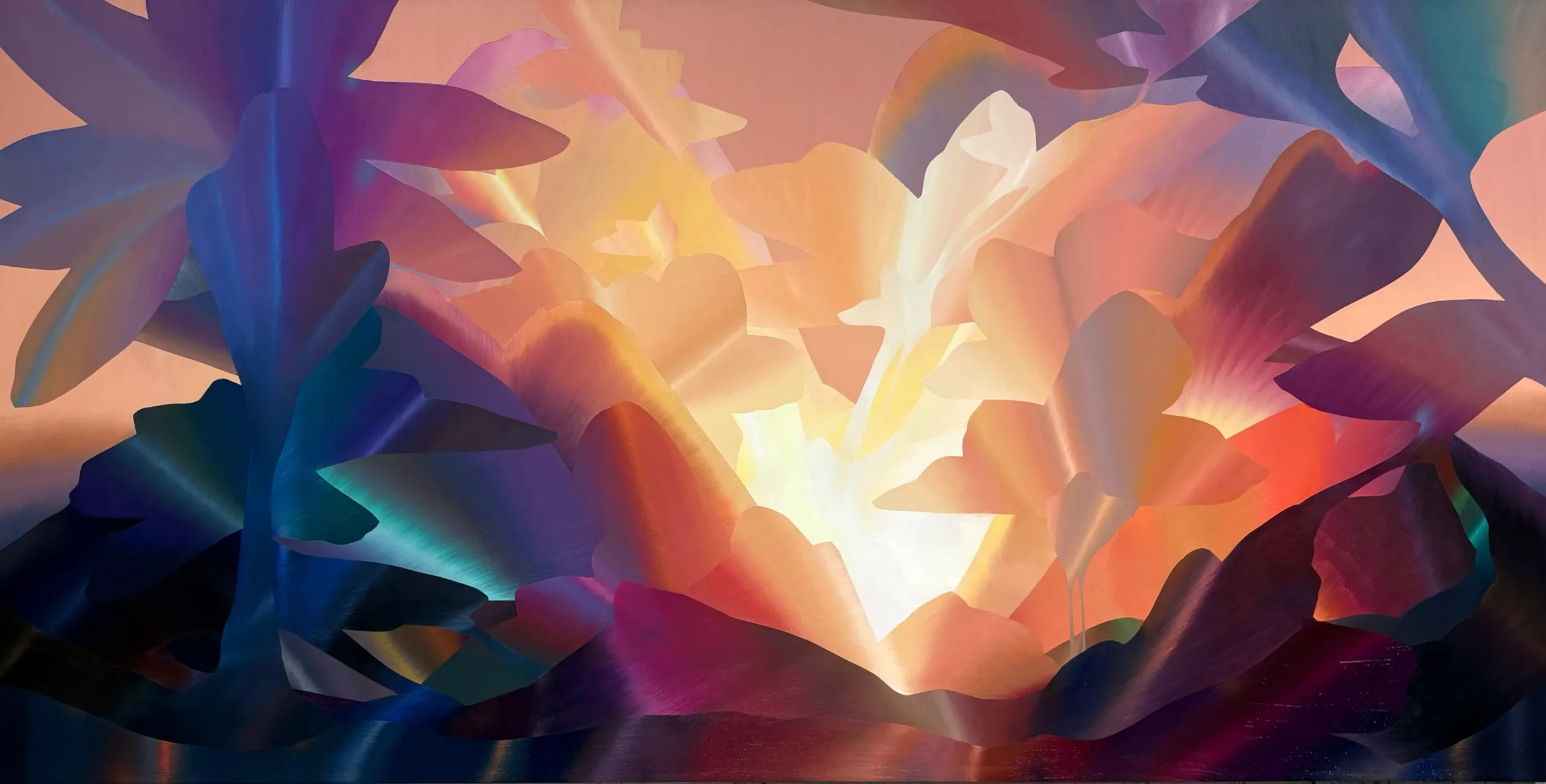
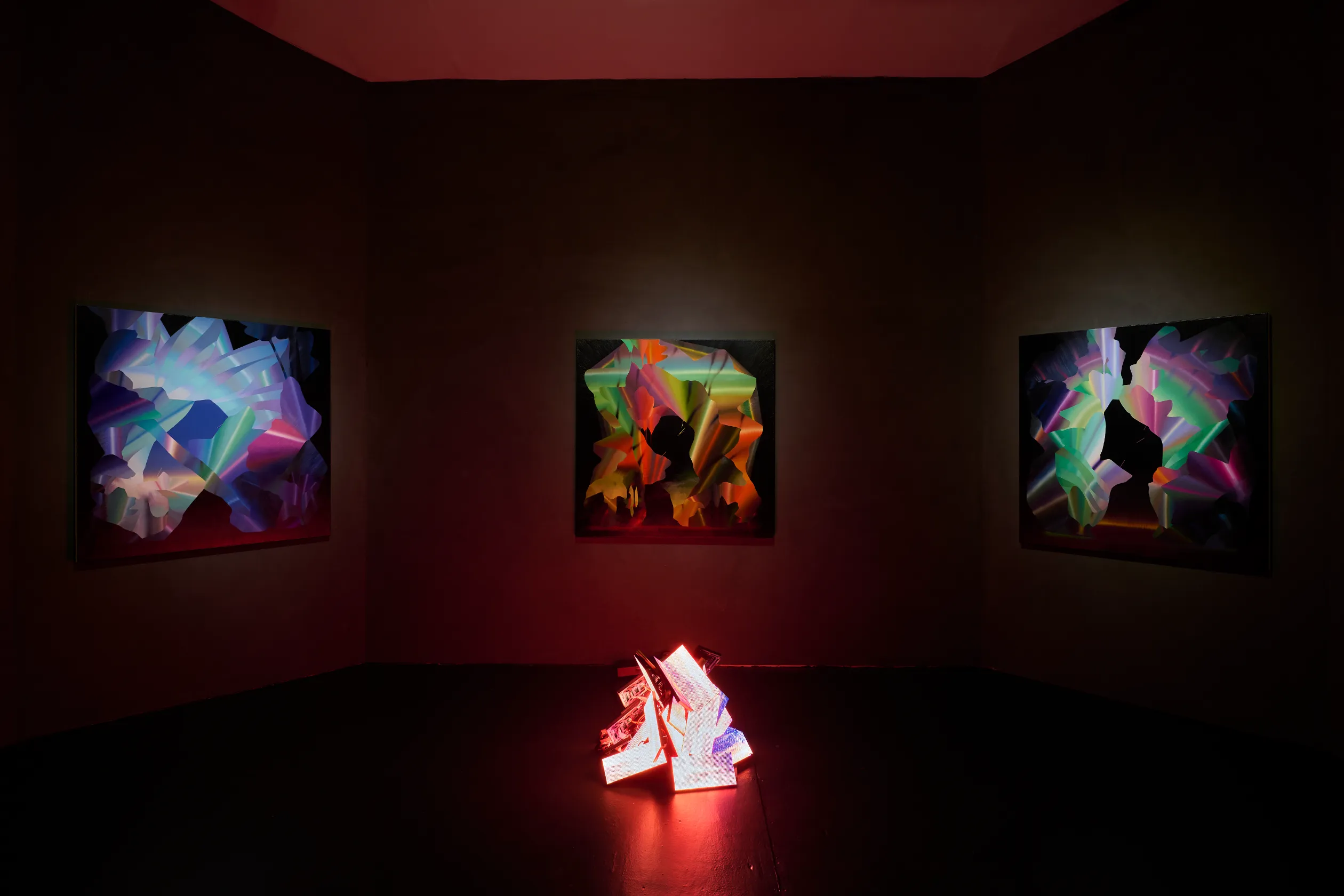
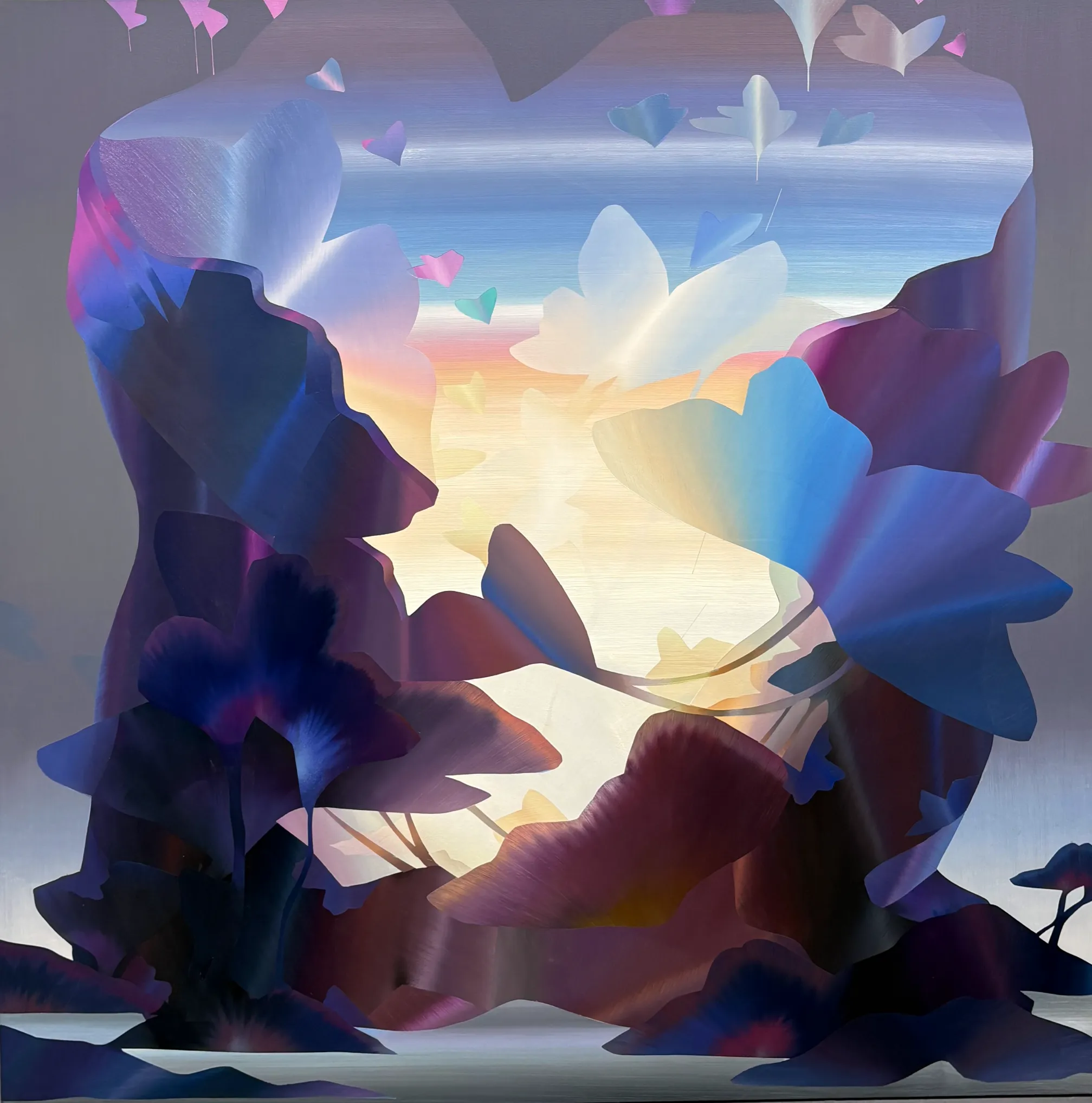
My paintings centre around imagined living sculptural objects and how they inhabit spaces or various worlds. On the surface they’re made up of many layered gradients that appear to shimmer like metallic surfaces. They come close to movements like Art Nouveau & Art Deco where nature meets technology to some degree.
When did you first realize that you could make a living from your art, and what were those early years like?
Making a living off of your art is certainly a more difficult and unpredictable path. I think we create firstly for the love of making new discoveries and fulfilling curiosities of the world and self. That love/delusion has to be there first to carry one through the rough patches the world can throw at you. My earlier years after art school were at an arts building in downtown Calgary,AB called Art Central. I took on a commercial lease for a 500sq foot space to make a public studio. It gave me a community and stream of new clients which felt like a heavy commitment at first but gave me some stability. I focused on making both portraiture/social commentary work and simultaneously abstract paintings for balance. I realized working in a vacuum of my own space could only go on for so many years . Eventually if you want to progress you have to step out into the world. At that time galleries were the main method of exhibiting work being pre social media. I was able to join a small commercial gallery run by Rob Mabee called Axis Gallery which was a great experience. It led me to work with other galleries up to now and I feel very fortunate it has worked out thus far.
You lived in Alberta before settling in Vancouver. How have these two environments influenced your work, and does the natural world, which is so present in your visual language, stem more from one place than the other?
Perhaps there are some elements of the cold and vast feeling of the prairies coupled with the lush and rainy world of the west coast. Crisp Alberta mornings stay in my mind still and have a special place. I do feel sentimental when I think of the place and also how far it feels in contrast whenever I return for family visits. I feel like moving to Vancouver opened up my view of the world a little more back in 2011. The rain of the west coast and greyness can make you mirror those things and at other times push back with colour and vibrancy. The worlds we live in can definitely affect our work and mindset. Both places do exist within my paintings without as doubt.
You explored landscape, still life, and portraiture before moving more deeply into abstraction. What did these traditional genres teach you that still informs your work today?
Studying so many varied genres and subjects felt like dating a lot of different people in the early years. Good experiences and bad ones at times…I think we could follow any of these paths and find happiness and self discovery. Like in life, we carry them into the next thing and add to the layers. I’m still trying to find ways of bringing these past bodies into my current explorations and methodology. They can only add to the depth of the work but finding a way to make it all gel can present as a lofty goal.
Your shimmering metallic forms emerge through many thin layers of luminous glazes. Could you walk us through what a typical day in the studio looks like?
I work on 4-5 pieces a day like a doctor sees his patients doing rounds. I work in procreate coming up with various options or next steps the night before. The studio sessions are for putting those to reality. A lot of trial and error happens but it is all exciting to me. I get up early and work for 6-8 hours, I enjoy the routine of making art and it grounds me.
You’ve said that each painting is a response to its predecessor. How does that ongoing dialogue work, and are there particular works that marked important turning points along the way?
They definitely follow a sequence of events at times until you can hit a roadblock. Then have to recalibrate or come at things from another vantage point. Knowing where you are going isn’t any fun in the mystery department so keeping yourself on your own toes is important. Finding challenges and questioning things. Doing research that may lead to a dead end or discovery is ok too. I have paintings that felt like breakthroughs at the time. I make so many things that they honestly get forgotten and I have to look back to see where I am. It is easy to focus on what is right in front of you but perspective and awareness is paramount too.
After more than twenty-five exhibitions, how has your definition of artistic success evolved?
It feels to me at this point like there is so much more to do and not enough time to accomplish what my brain wants to set out and achieve. I think there are small spurts where you gain some traction followed by lulls where you have to be steady and do the work to find the next opportunity. More importantly that success is having the privilege to make art daily and that makes it all worth the sacrifices. Getting to play around is the ultimate joy. I will do this until I can’t physically paint anymore.
Is there a particular artist who inspires you, and if so, why?
My friends Bradley Harms and Tim Okamura (who are painters) were like older brothers to me and inspire me. All you need are a few good people to help guide you in the early years.
Do you have any upcoming projects or exhibitions that you would like to share with us?
I have an upcoming show In Toronto at Bau-Xi Gallery January 14th-Feb4th. I’m still working on my title so tbd! After that I have a show here in Vancouver At Bau-Xi Gallery in early May then Herringer Kiss Gallery in Calgary Fall 2027. I’m excited for them all, should be a good year!
To learn and see more of Eric Louie’s work: Website & Instagram.
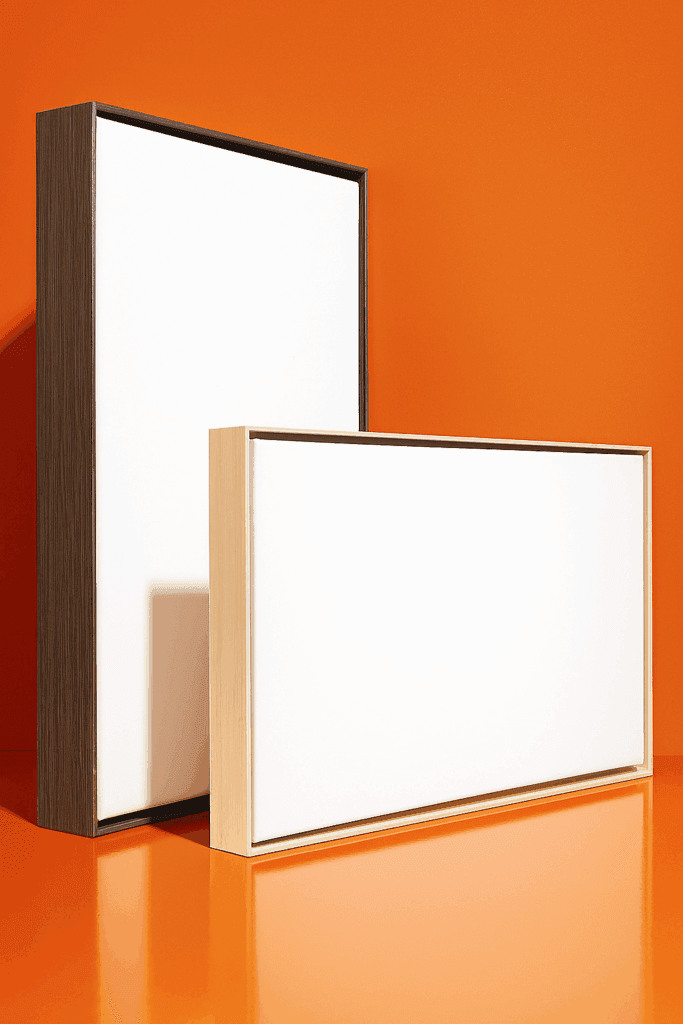
Do you need affordable floating frames for your artworks? The Kolekin frames are the solution!
- Easy assembly at home
- Affordable (but with that gallery look!)
- Free shipping over $50
