


Most people walk right past the places that inspire Allan Thomas. Drawn to old storefronts, faded signs, graffiti, and weathered buildings, he finds beauty in the overlooked corners of the city. We spoke with Allan about his creative process, scratchboard art, murals, and his love of urban landscapes.
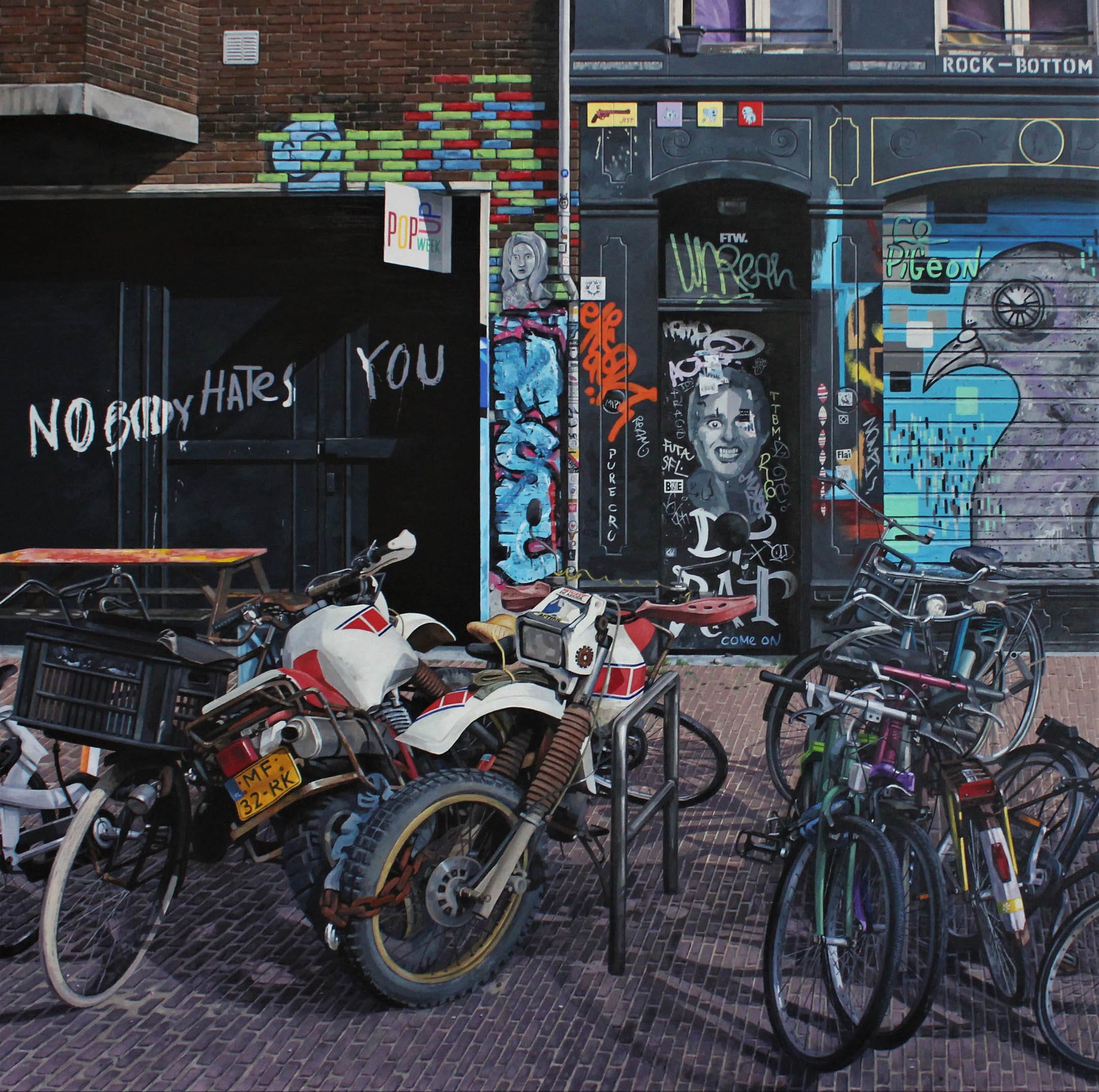
You often paint urban places that people pass through without really noticing. What draws you to these ordinary and often overlooked spaces?
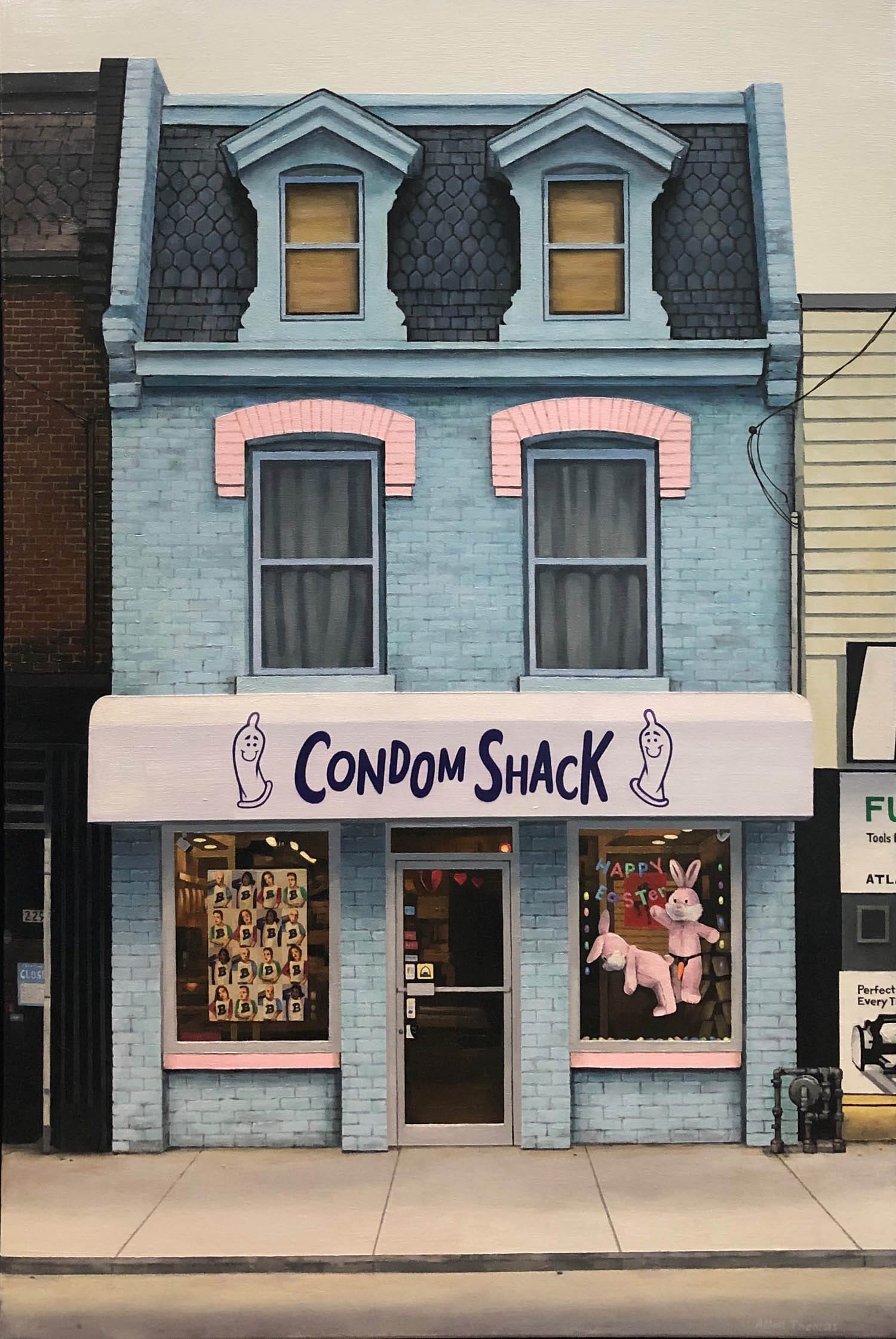
I am always looking for overlooked places, I don’t like my painting locations to be city landmarks or anything. Some of the different things that catch my attention would be, interesting signage, architecture, graffiti, and I really like unkept areas with lots of layers of old paint and textures.
You describe yourself as a Contemporary Realist. What does the term “Contemporary Realism” mean to you, and how has your approach evolved over the years?
Contemporary realist would just be someone that works in a realistic style in modern times. Throughout history there has always been artists working realistically, just the methods and subject matter might have changed. I guess I most identify with being called an Urban Landscape painter, a realist is such a broad term, I don’t really feel I have much in common with the artists that do things like realistic portraits or still life’s.
I think I approach my art the same way as I always have, it’s just after doing it for so long I keep getting more confident, and I think I keep getting better at everything from picking subject matter and taking photos, to the actual painting techniques I use.
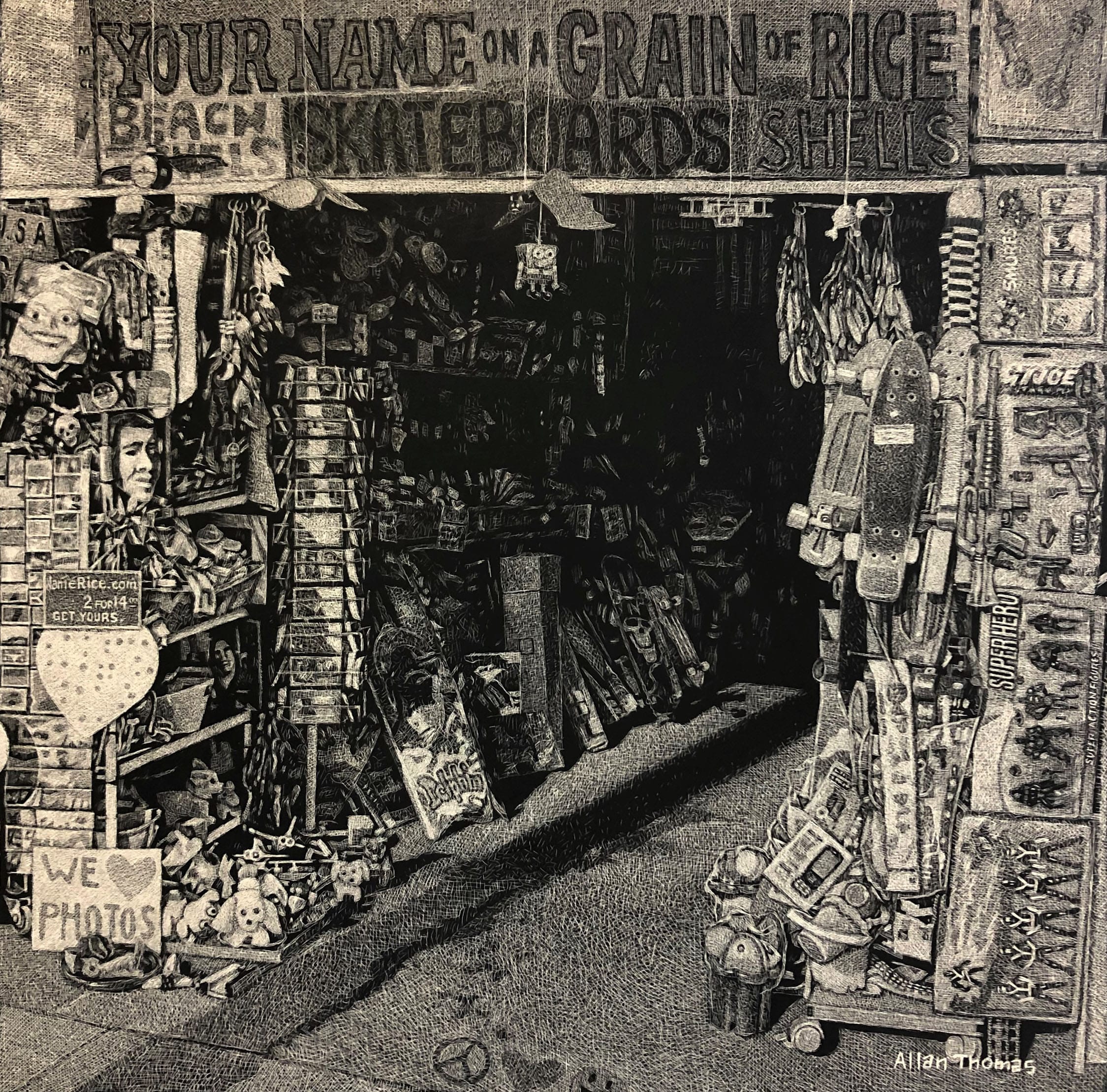
You work in both oil on birch panel and scratchboard, two very different mediums. What attracts you to scratchboard, and what does it allow you to express differently from oil painting?
I’ve always liked black and white work, it always looks so dramatic when you get a good image to work with. I like to describe scratchboard as the opposite of ink drawing, instead of putting the ink on I’m scratching it off, and it’s very unforgiving, you need to think it out constantly, once it’s scratched off it’s gone. That’s a major difference with the two mediums, when I’m painting in oils I get to paint in layers, and use a variety of paint techniques, it’s so much more freeing, if I mess up I can just go back and fix it.
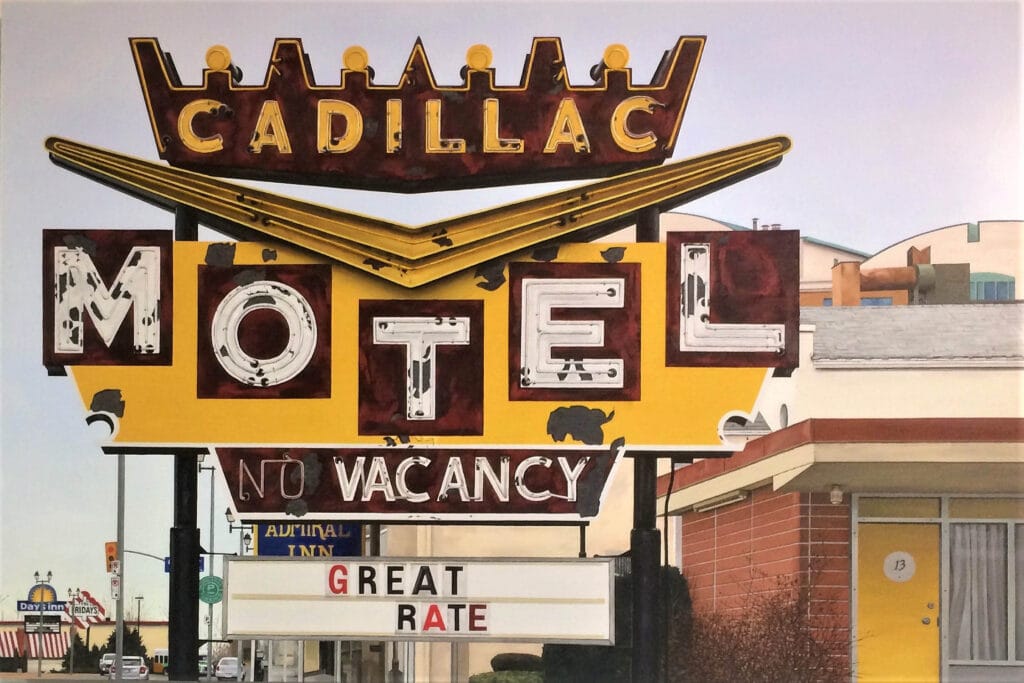
Can you tell us about your creative process, from the initial idea to the completion of a work?
I’m always on the lookout for interesting buildings, when I travel I like to drive around the city looking for stuff, once I find something I take a lot of photos which I will eventually whittle down to just one image, by the time I paint something I’ve already spent a lot of time thinking about what needs to be done, and if there is any changes that need to help the painting look it’s best. Then I draw it out, photos distort the buildings so I make sure to fix everything, so I need to ask myself is that light pole leaning because the photo or is that how it looks, because I don’t want to change the feel of what attracted me to the area in the first place. After that I block all the colours in, then I keep working the painting fixing things and adding more details until it’s completed.
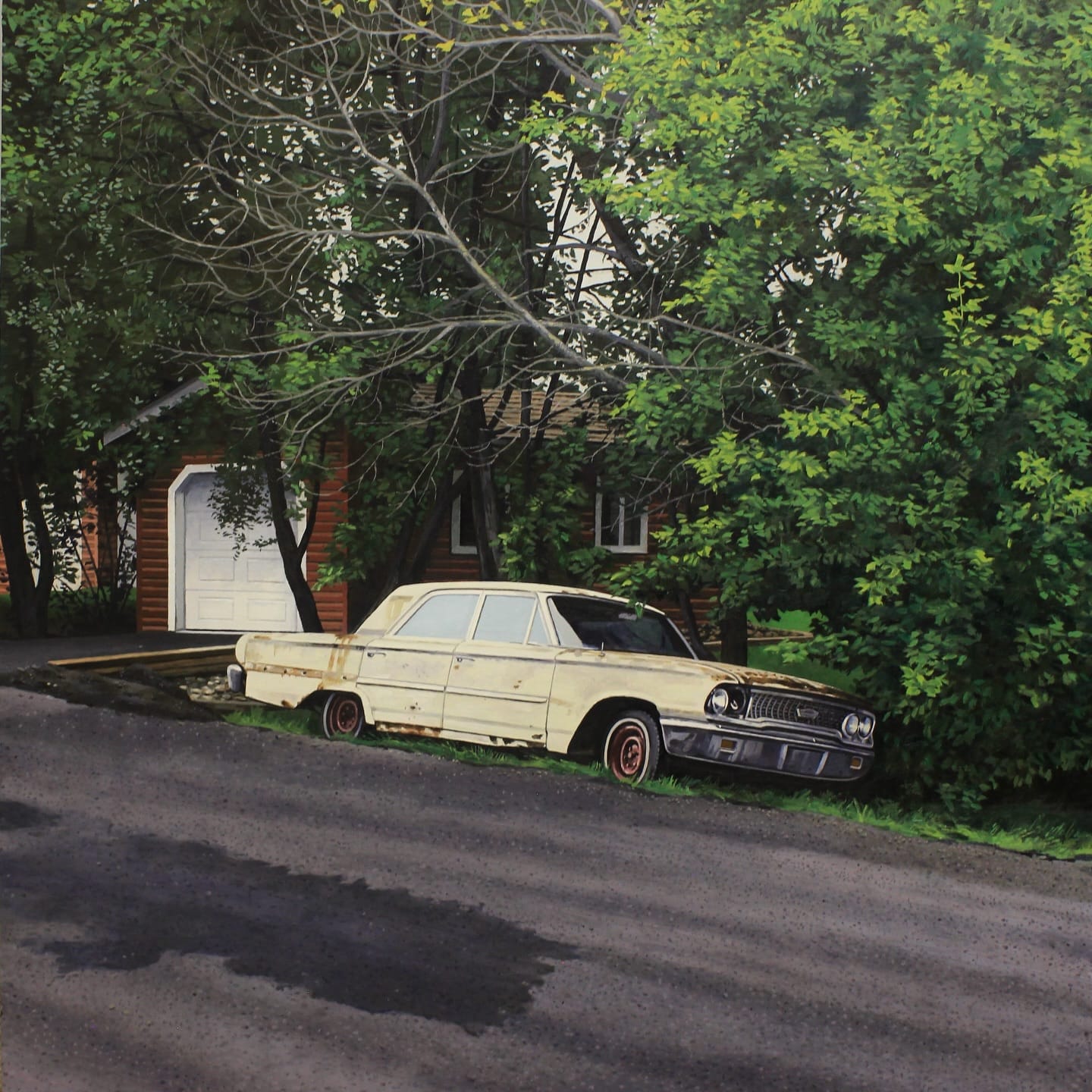
You have more than 25 years of experience as a muralist, both in Canada and internationally. How has working on a monumental scale influenced your approach to your smaller, highly detailed paintings?
The two are so different, I’m not sure if they influence each other. With the murals I’m using big brushes and latex and acrylic paints, working on scaffolding or scissor lifts. A lot of times your working outside dealing with all the different weather mother nature is throwing at you, it can be too sunny and hot or windy and rainy, it does make it challenging sometimes. It always surprises me that a big mural can be done in a week or two, but a ‘4 X’4 oil painting can take a month. One big difference is when I do murals I’m usually working with my brother Dave Thomas, so it’s more of a collaborative work, we work so well together that the image always looks like it was painted by one person.
One thing that really helps the two is when I’m doing murals in different cities, I’m always driving around looking for the images that will eventually turn into my paintings.
After more than 25 years of working with murals and urban landscapes, what continues to surprise or inspire you about cities?
When I go to a new city it’s always exciting getting to see a place with fresh eyes, I’m never sure if I’ll find something that’s going to turn into a painting, but I always do. I usually like to find the seediest area of town, that’s where the most interesting places tend to be, if I go to an area that’s not taken care of I will find buildings that are all weathered and have graffiti on them, not the nice shiny big name stores you find in the nicer areas of town.
Is there an artist who particularly inspires you? What do you admire about their work?
I like so many different styles of art, some of my favourite painters are, Jean-Michel Basquiat, Warhol, Justin Mortimer, Kent Williams, Phil Hale, Andrew Wyeth, Robert Rauschenberg... There is so many I couldn’t possibly list them all, but for the work I do, and who most influences it, would definitely be Rod Penner. Everything from his subject matter that is everyday places, to how he paints it. Sometimes if I’m going to be painting a gravel road or something, I can go look at his work and that will be inspiring, it shows the benchmark of where I need to try and be with my own work.
Another inspiration would be my older brother Dave, he’s an amazing artist, and he was always pushing me to be better, I’m sure sometimes I didn’t want to hear it, but it definitely turned me into a better artist.
Do you have any upcoming projects or exhibitions that you would like to tell us about?
Yes, I have a show that starts Nov. 6th at the Peter Robertson Gallery in Edmonton.
I’m so excited because the work I’ve been doing is some of my best yet, I think I have some really interesting subject matter that I’ve picked for this one, lots of cool storefronts, with all those pesky reflections that are always so hard to paint. And it’s in my hometown so it will be nice having family and friends being able to come out and support me. The gallery is also a great space, I’ve grown up going there looking at the great roster of artists they have, so it means a lot to actually be there myself now, I guess it goes to show what a lot of hard work can do for you.
To learn and see more of Allan Thomas's work: Website & Instagram.
Do you need affordable floating frames for your artworks? The Kolekin frames are the solution!
- Easy assembly at home
- Affordable (but with that gallery look!)
- Free shipping over $50
