


Jason Wasserman has been working as an illustrator in Montreal since 2004, developing a highly recognizable black-and-white style rooted in comic book art. We spoke with Jason about his visual language, his work across illustration, painting and murals, the En Masse collective, and his love of Montreal.
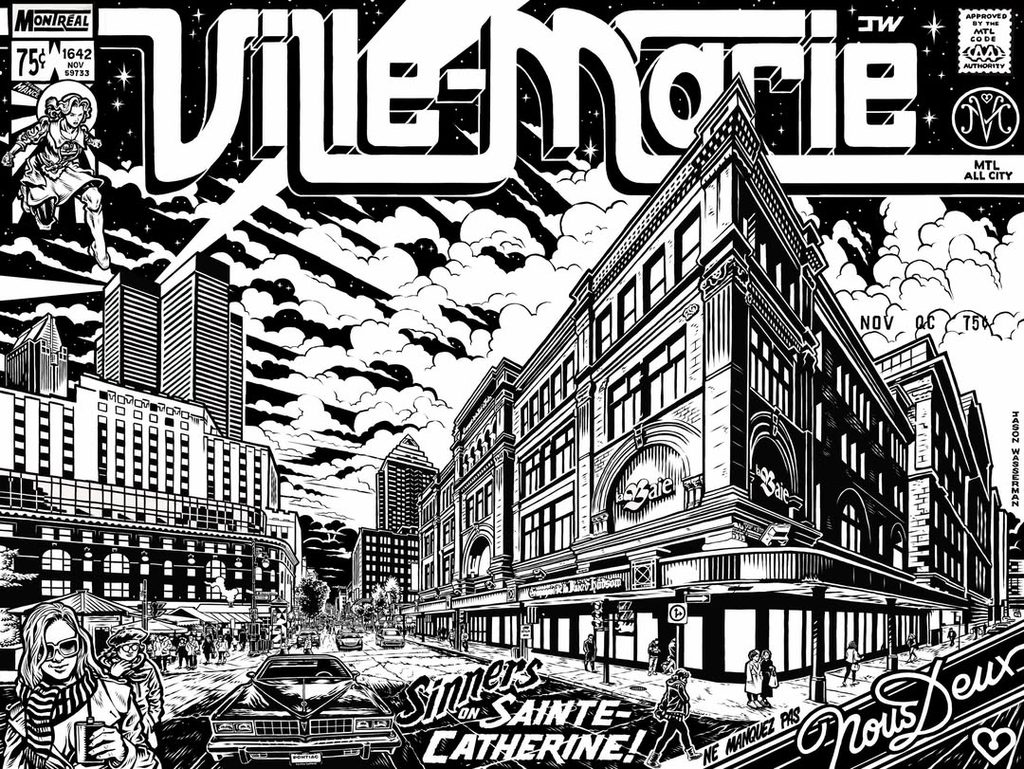
You have been working as an illustrator since 2004 and have developed a highly recognizable style. How has your visual language evolved since the beginning of your career?
Starting out In 2004, I was determined to explore as many styles as I could. I wanted to be as versatile as possible, not be locked down to one singular style, which I thought would box me in for the rest of my life. I already had a decent foundation in graphic style illustration, from my early years obsessing over comic book art. I had a job as an editorial illustrator, which allowed me to try out different styles, depending on the article. I also co-founded an artistic collaboration, creating paintings, photography, furniture design, animation, and fashion. We were making these large-scale paintings, in a pop-surrealist style, putting off our own art shows at abandoned venues, and trying unsuccessfully to sell or to get into a gallery. When the collaboration ended around 2010, and I went solo, I had enough of working in all these disciplines and multiple styles. I wanted to be creating stuff I could make fast, and not be bogged down on the same piece for months at a time. I had also been working in the fashion industry for a few years at that point, as an illustrator and graphic designer, making artworks for screen-print, which works best as bold, black and white art. That limitation made me prioritize what information to convey, keeping only the essential elements and then highlighting them to be as clear as possible. Stripping away colour made me realize I could do more with less. There was an inherent abstraction and minimalism that gave more room for showing the hand of the artist in the render. I was ready to commit to a singular style, and it felt good to go back to my comic book roots. I started writing and drawing a black and white comic book, which took me about 2 years to complete, in between my day job. I also released a series of screen-printed posters influenced by vintage comics. The prints did well, so I tried to push the black and white style to be as bold and simple as possible, while still retaining enough detail to be interesting. I could see the value of having a clear and unique style that clients could identify right away, and it turned out to be ideal in telling different, complex stories in a fun and original way.
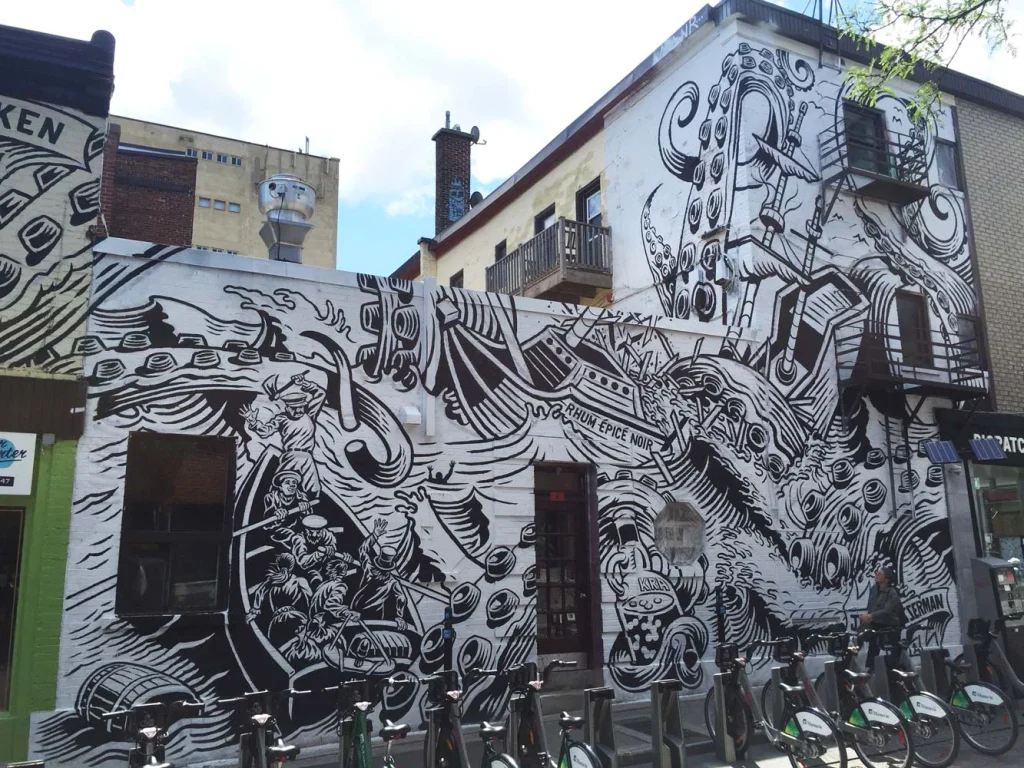
Your work moves between illustration, painting, and murals. What do these different mediums bring to your practice, and how do you choose the one that best suits an idea?
There's so much overlap here, it's hard for me to tell them apart sometimes. As mediums, they allow me to cross over onto different surfaces, tools and scales. As fields, illustration and painting are two sides of the same coin, feeding each other. The commercial illustration side came more naturally to me. I enjoy the constraints, requirements of technical skill, and the clear financial reward as an easy barometer of success. It's made me appreciate how client work is actually an amazing collaboration, a chance to be inspired by someone else's ideas. Fine art is a bit of a tougher road, having to dig deep down and to create something meaningful that I "need" to express, which in reality is not always there. Sometimes I need months off to get that kind of inspiration. But it allows me to push the envelope with more experimentation. And clients often end up asking for something similar to what they'd see in my fine art portfolio for a commercial gig. An experimental exhibition on the theme of horror led directly to a massive commercial campaign for Mountain Dew. Murals came later, around 2010, and served as an interesting bridge between these two fields, and a way to share my work with the public at a large scale. It's usually the medium that chooses the idea, not the other way around. I follow the requirements of the medium or project - like if a client is looking for a mural, I'm going to develop an idea around the story they're trying to tell. Or if I need to make a new painting for a gallery, I'll choose a concept that lets me focus on my love of architecture, like a particular street corner, then do a deep dive into research, and something will inevitably spark my interest.
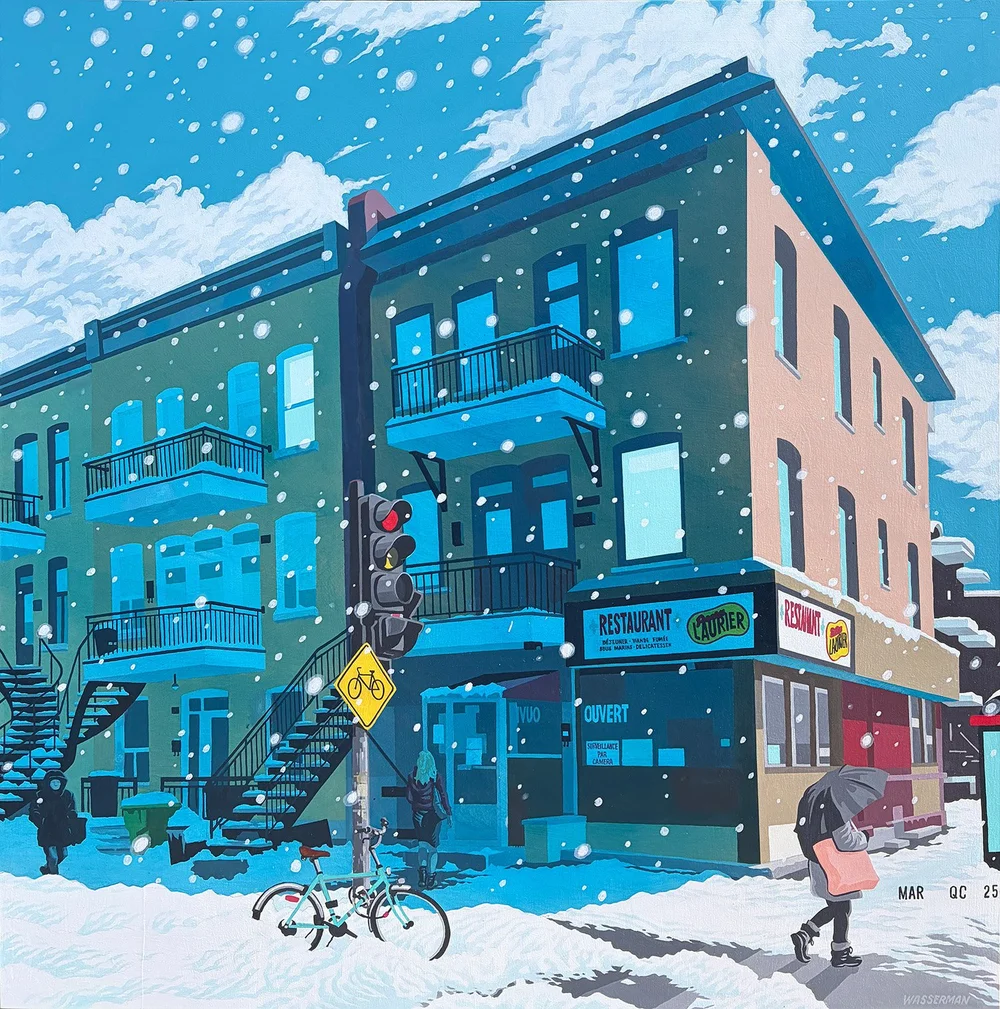
You describe your art as a celebration of the city of Montreal. As an artist, what does this city bring to your work?
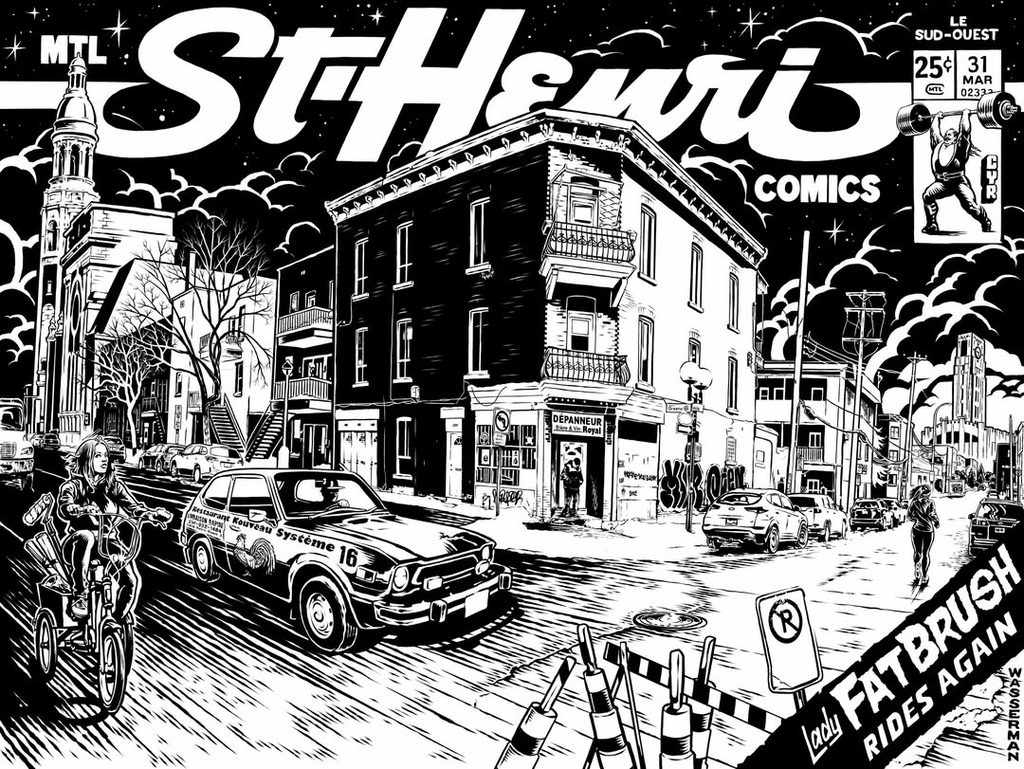
Having grown up here, and as a third generation Montrealer, it feels like this place is in my DNA. I love putting those little easter eggs into my Montreal neighbourhood posters that only a local would understand. Like putting Louis Cyr in the corner-box. The people here are a joy to render, like an endless cast of bizarre and beautiful characters from a comic book. A walk down a random side street reveals the most mind blowing architecture. Even the mundane duplexes of St-Leonard from the 70's have a unique flavour and elicit nostalgia for that era. The architecture in particular has become central to my depictions of the city, the real star, and the people, vehicles and typography are just the props decorating it.
You joined the En Masse collective in 2010 and have participated in more than 100 collaborative murals. Tell us about the En Masse collective and its achievements.
En Masse is a collection of visual artists collaborating in black and white, mostly on murals. The artists come from different fields like painting, illustration, comic books, and tattooing. It began with live painting at art shows and random events, and grew over the years to a multi-branched international organization involved in commercial, public and education projects. En Masse really introduced me to creating murals, and gave me the experience of working with a team of artists I could learn from and count on. The Big Bang exhibition (2012) at the Montreal Museum of Fine Arts is one of its crowning achievements, where over 30 artists covered the walls in one of those big rooms. I feel lucky that I've been able to be a part of it. It's allowed me to work alongside of, and get to know some of Montreal's best artists, and those people have become part of a crucial network of artists in Montreal.
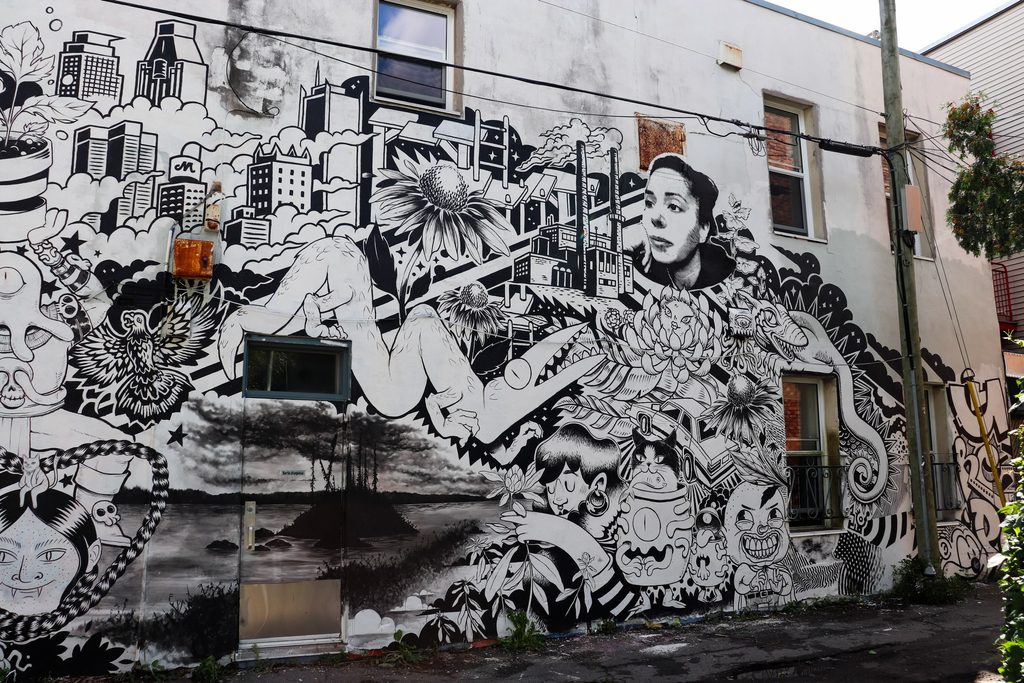
What is the process of creating a mural as a group? How is the work divided, and how do you achieve visual cohesion?
The process is improvisational, with a lot of communication. If we have a brief, we each show up with some sketches. There's conversation beforehand about who will be doing what, so that there's not too much conceptual overlap, and sometimes we designate or volunteer certain elements each artist is particularly good at. Some are exceptional at typography, others are great at characters. I pride myself on handling architecture. Drawing up a massive, perspective heavy building, completely freehand on a giant scale while someone next to you is out busting some wild character art feels like what I imagine it would be to play on a professional sports team. We've worked together so many times, it's like a well-oiled machine with a high degree of trust, and we just let each other do their thing. Once the main pieces show up on the wall, we discuss how to bring it together, with new ideas popping up along the way, and what background elements could be used to stitch it together. In the end, the whole thing comes together into a chaotic tapestry of images that is truly more than the sum of its parts.
Can you walk us through your creative process, from the initial idea to the finished artwork?
I start with a deep dive into research, online or in my library. I spend a good amount of time just randomly reading on the subject, trying not to go off on too many tangents, but that's often where some great unexpected ideas come from. Once I have my reference material, I'll assemble a digital photo collage in Photoshop. This usually takes a full day or longer of constant tweaking. From there, I take the collage into Procreate on my iPad to meticulously draw out the final, clean illustration. If it's a mural that I'm working on, I'll then take that illustration and use a projector to scale it up to wall-size and draw in the main shapes. If a projector is not an option, I'm scaling it up completely by eye or using a giant grid. Compared to the calm setting of my studio, working on an iPad with an undo button, making murals is a physical, full-body experience, involving long hours, wrestling with weather and dealing with sheer physical height. But there's nothing like creating an original, enormous painting that becomes part of the local architecture.
Which artist inspires you the most, and why?
For style, my biggest inspiration is the comic book artist/writer Charles Burns. His book Black Hole is legendary, and opened my eyes to what could be done in black and white. His rendering of hair is still beyond my comprehension. For murals, it's Jason Botkin, the co-founder of En Masse, and my partner on innumerable murals. He always led by example, and taught me to work big, fast, tirelessly and fearlessly. I will never stop being in awe of how he can boldly step up to a wall and simply start painting a huge element with absolutely no plan except a vision in his head, mistakes getting adapted into happy accidents, and the end result is always striking from a distance.
Do you have any upcoming projects or exhibitions you'd like to tell us about?
Right now, the big dream is to gather all these Montreal neighbourhood prints into a comprehensive art book. I want them to coexist in one physical space, where people can flip through the streets as if they were reading a comic book. I'm not sure if I'll ever finish every single borough (I'm looking at you Montreal-Nord) but chasing it is the best part.
To learn and see more of Jason Wasserman's work: Website & Instagram.
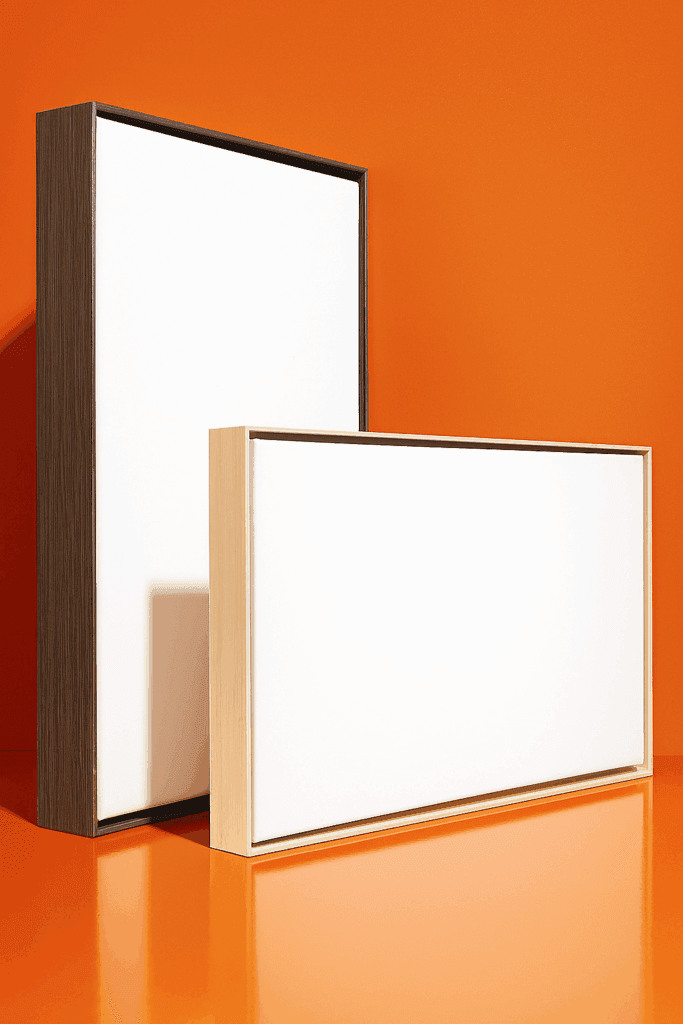
Do you need affordable floating frames for your artworks? The Kolekin frames are the solution!
- Easy assembly at home
- Affordable (but with that gallery look!)
- Free shipping over $50
